Spacious modern kitchen featuring grey tiled floor and a large island with seating

Top Factors to Consider Before Choosing Kitchen Flooring

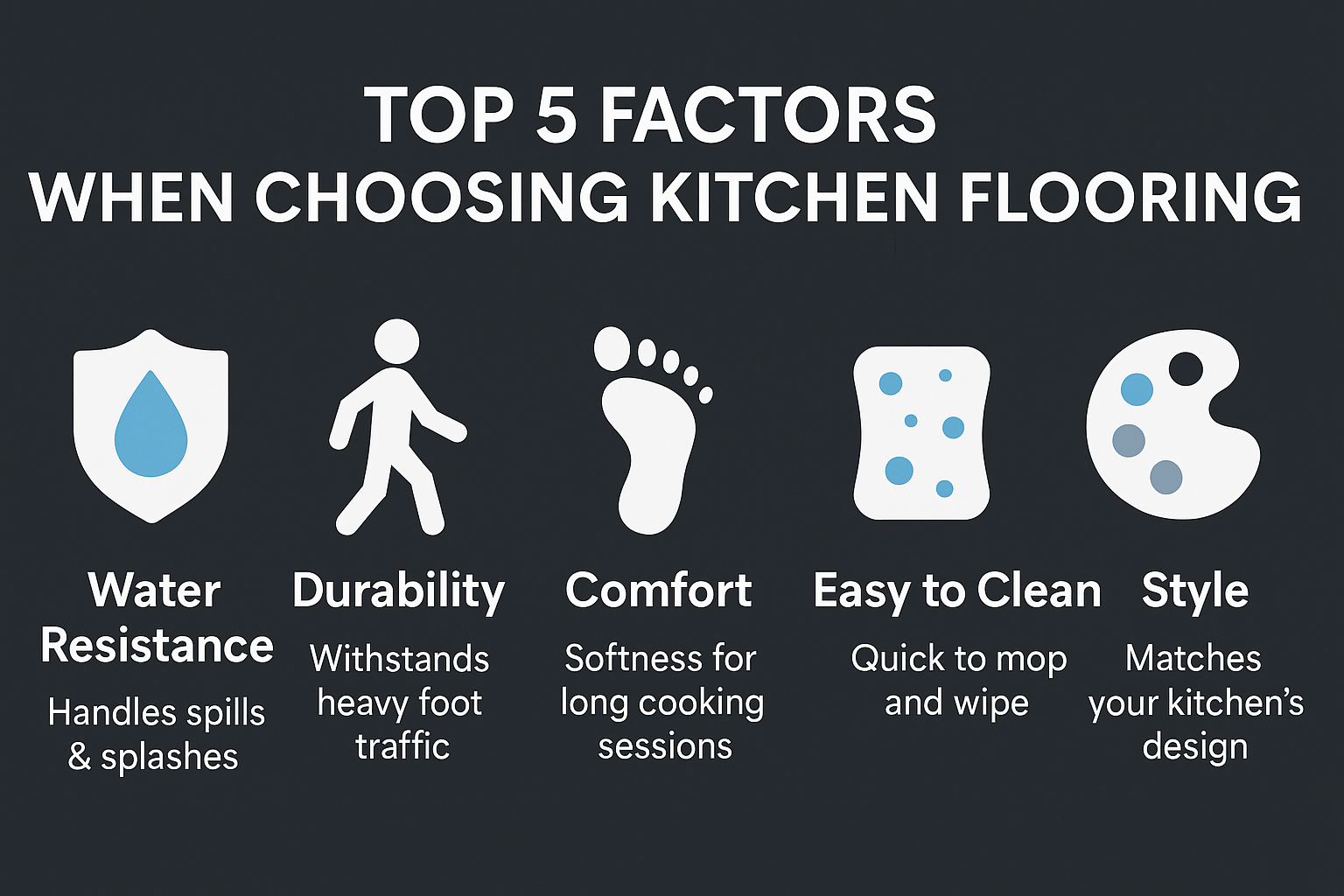
Water Resistance and Spills
Kitchens get wet often with spills and splashes. Pick a floor that handles water well without damage. Waterproof choices like luxury vinyl, tile, and some engineered wood work great.

Durability for Heavy Foot Traffic
Kitchens are busy spots with lots of walking. Floors should handle movement and dropped items. Look for strong materials that resist wear and tear.

Comfort Underfoot
If you stand a lot while cooking, comfy floors help. Materials like cork or vinyl are softer. You can also use soft mats for extra comfort.

Ease of Cleaning and Maintenance
Kitchens get messy. Choose floors that are easy to clean. Non-porous surfaces like tile, sealed hardwood, or vinyl make cleaning simple.

Visual Style and Design Cohesion
The kitchen floor impacts the room’s look. Think about how the floor matches cabinets and counters. Whether you like wood, stone, or tile, ensure the floor fits the room’s style.

Kitchen Flooring Factors Comparison Chart

MaterialWater ResistanceDurabilityComfortMaintenanceStyle Compatibility
Luxury Vinyl Plank (LVP)✅ Waterproof✅ High✅ Soft✅ Easy✅ Versatile
Porcelain Tile✅ Waterproof✅ High❌ Hard✅ Easy✅ Modern/Classic
Ceramic Tile✅ Water-Resistant✅ High❌ Hard✅ Easy✅ Traditional
Hardwood❌ Not Ideal✅ High✅ Warm❌ Moderate✅ Timeless
Engineered Wood⚠️ Water-Resistant✅ Moderate✅ Warm⚠️ Moderate✅ Contemporary
Laminate⚠️ Water-Resistant✅ Moderate⚠️ Moderate✅ Easy✅ Modern
Sheet Vinyl✅ Waterproof✅ Moderate✅ Soft✅ Easy✅ Varied
Cork⚠️ Water-Resistant⚠️ Moderate✅ Cushioned⚠️ Moderate✅ Eco-Friendly
Concrete✅ Waterproof✅ High❌ Hard✅ Easy✅ Industrial
Natural Stone⚠️ Water-Resistant✅ High❌ Hard❌ High✅ Luxurious

Best Kitchen Flooring Materials (Pros & Cons)

Choosing kitchen flooring depends on style, performance, and practicality. Here’s a look at popular kitchen flooring options in 2025, including their benefits and drawbacks:

Hardwood Flooring in the Kitchen

Pros: Adds warmth and character, boosting home value.
Cons: Can suffer moisture damage without proper sealing.

Luxury Vinyl Plank (LVP) in the Kitchen

Pros: Waterproof, affordable, and offers realistic looks with comfort.
Cons: Lower-quality LVP might dent or fade with heavy use.

Tile Flooring in the Kitchen (Ceramic & Porcelain)

Pros: Durable and water-resistant, available in many styles.
Cons: Can be cold and hard; rugs or heating may be needed.

Laminate Flooring in the Kitchen

Pros: Cost-effective with modern styles and easy cleaning.
Cons: Prone to water damage and may not last as long as other options.

Natural Stone Flooring in the Kitchen

Pros: Elegant and unique, with great durability.
Cons: Expensive, needs sealing, can be slippery or cold.

Sheet Vinyl Flooring in the Kitchen

Pros: Seamless, waterproof, and soft underfoot.
Cons: May lack realism and wear down over time.

Engineered Wood in the Kitchen

Pros: Moisture-resistant and warm appearance.
Cons: Still vulnerable to water damage and costs more than some alternatives.

Cork Flooring in the Kitchen

Pros: Soft and eco-friendly, reduces noise.
Cons: Needs regular sealing and may fade in sunlight.

Concrete Flooring in the Kitchen

Pros: Durable with modern style and waterproofing.
Cons: Hard and cold; may need heating or rugs.

#MaterialPros (Kitchen Use)Cons (Kitchen Use)
1Luxury Vinyl Plank (LVP)Waterproof, realistic, affordable, softMay dent or fade in busy kitchens
2Porcelain/Ceramic TileWater-resistant, durableCold and hard; may need rugs or heating
3Sheet VinylWaterproof, soft, budget-friendlyLess realistic; wears over time
4Engineered WoodMoisture-tolerant, warmVulnerable to water exposure
5Laminate FlooringAffordable, water-resistantMay swell if water seeps in
6ConcreteDurable, waterproof when sealedCold and hard; may need sealing and heating
7CorkCushioned, quiet, eco-friendlyNeeds sealing and UV protection
8Natural StoneElegant, durableExpensive, needs sealing
9Hardwood FlooringWarm, timeless lookNot good with moisture

We offer financing options, and you can visit our showroom/store.

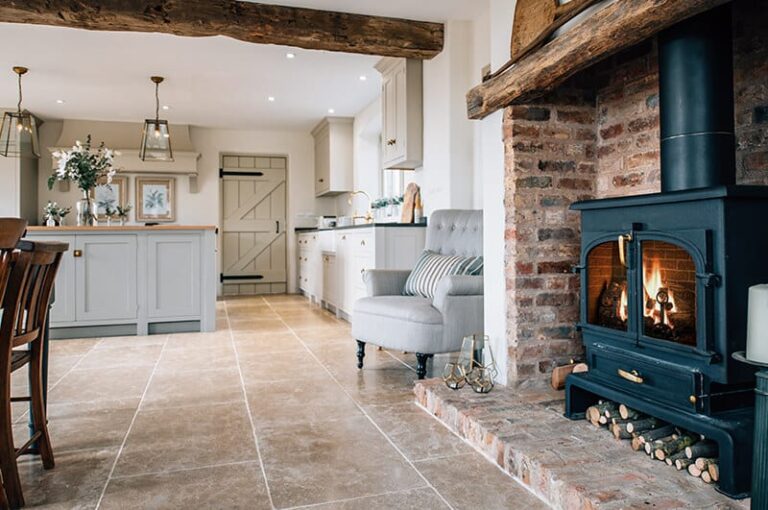
A charming rustic kitchen featuring a fireplace, grey cabinetry, and a comfortable armchair.

Waterproof vs. Water-Resistant: What You Really Need For Your Kitchen Floors

When picking kitchen flooring, it’s important to know how well it handles water. Not all floors are the same — people often mix up “waterproof” and “water-resistant”.

🔍 Key Differences Explained

  • Waterproof kitchen flooring doesn’t let any water in — it can be soaked or steam-cleaned without getting damaged.
  • Water-resistant kitchen flooring can take small spills and damp cleaning but might absorb water if it sits too long.

Think of waterproof like a raincoat and water-resistant like a hoodie — both protect, but one is better in heavy rain.

💧 Which Flooring Materials Are Truly Waterproof?

If your kitchen often gets spills or needs heavy cleaning, these waterproof kitchen flooring materials are best:

  • Luxury Vinyl Plank (LVP) and Sheet Vinyl – Completely waterproof and perfect for busy homes.
  • Porcelain and Ceramic Tile – Waterproof with the right grout and sealant.
  • Concrete Flooring – Fully waterproof once sealed; ideal for modern kitchens.

🏡 Best Flooring for High-Moisture Kitchens

For homes with kids, pets, or lots of cooking, these flooring options offer good waterproofing and durability:

  1. Luxury Vinyl Plank (LVP) – Great for waterproofing and style.
  2. Sheet Vinyl – Offers seamless protection at a lower price.
  3. Tile (Porcelain or Ceramic) – Very strong and waterproof when installed right.
  4. Engineered Wood with Water-Resistant Core – Looks like real wood with some water protection.

Avoid solid hardwood or unsealed cork in wet kitchens unless you plan to maintain them often.

Easy-to-Clean Kitchen Flooring Options

A clean kitchen means picking kitchen flooring that hides messes and makes life easier. For crumbs, spills, or lots of foot traffic, some materials need less work to keep clean.

🧼 Top Kitchen Flooring Materials for Stain Resistance

  • Porcelain and Ceramic Tile – Stain-resistant and easy to clean, even after spills like grease or tomato sauce.
  • Luxury Vinyl Plank (LVP) – The top layer protects against stains, scuffs, and dirt, great for busy kitchen areas.
  • Sheet Vinyl – Seamless surface keeps spills from soaking in, making cleaning quick.
  • Sealed Concrete – Stays stain-free if sealed properly; ideal for modern kitchens with bold looks.

👀 Finishes That Hide Dirt and Crumbs

Some kitchen floors hide mess better. These finishes help cover up daily dirt:

  • Matte Finishes – Less glare and better at hiding smudges and dust than shiny surfaces.
  • Textured Surfaces – Wood grains or stone textures can conceal crumbs and footprints.
  • Mid-Tone Neutrals – Colors like beige, taupe, or greige hide dirt and pet hair well.

✨ Maintaining Shine and Durability

To keep your kitchen floor looking nice:

  • Sweep or vacuum regularly to remove grit that might scratch the floor.
  • Use a damp mop with approved cleaners — avoid harsh chemicals on vinyl, laminate, or sealed wood.
  • Reapply sealant for materials like concrete, cork, or stone every few years to guard against stains and moisture.
  • Add felt pads to the bottoms of chairs and stools to lessen wear over time.
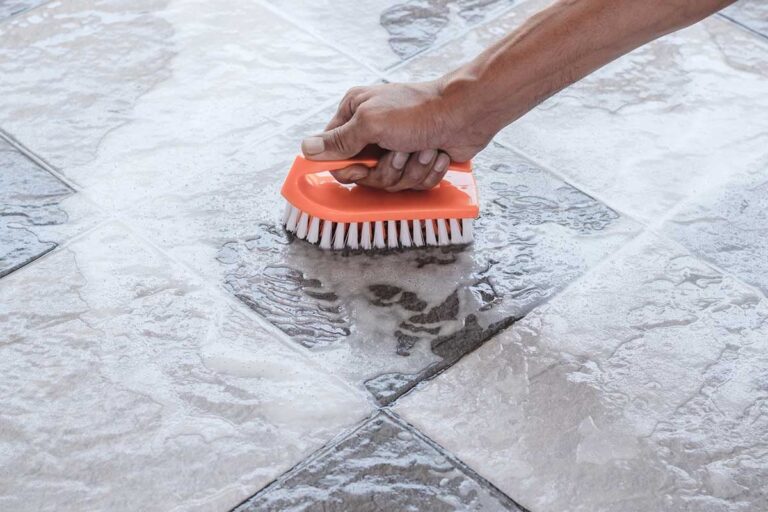
Person scrubbing tile floor with an orange brush

Cost Breakdown Of Kitchen Flooring By Material & Labor

Choosing kitchen flooring affects your budget, but with the right information, you can manage cost, performance, and durability. Here’s what to know about costs, installation, and value over time.

💰 Material Cost Per Square Foot (2025 Averages)

MaterialPrice (Per Sq Ft)
Sheet Vinyl$1 – $3
Laminate Flooring$1.50 – $4
Luxury Vinyl Plank$2 – $5
Ceramic Tile$2 – $6
Engineered Wood$4 – $8
Porcelain Tile$3 – $10
Concrete (Polished)$3 – $12
Cork Flooring$4 – $7
Hardwood Flooring$6 – $12
Natural Stone$7 – $20+

These prices are for mid-range products. Premium designs or finishes can increase costs. Want a detailed cost breakdown?

🛠️ Installation Cost: DIY vs. Professional

MaterialDIY-Friendly?Professional Install Cost (Per Sq Ft)
Sheet Vinyl✅ Very Easy$1 – $3
Laminate✅ Easy$2 – $5
Luxury Vinyl Plank✅ Easy$2 – $6
Ceramic/Porcelain Tile❌ Moderate-Hard$5 – $15
Engineered Wood⚠️ Moderate$4 – $10
Hardwood❌ Difficult$6 – $15
Concrete❌ Specialized$5 – $12
Cork⚠️ Moderate$4 – $8
Natural Stone❌ Complex$8 – $20+

DIY saves on labor, but complex materials like tile and hardwood are best left to flooring installation professionals unless you are experienced. Want to try installing yourself? Check out our DIY guides:

📈 Longevity & Value Over Time

  • Best Value Long-Term: Porcelain Tile, Luxury Vinyl Plank, and Engineered Wood — good mix of durability and style.
  • Budget-Friendly with Good Lifespan: Laminate and Sheet Vinyl — easy to install and care for, but lasts about 10–15 years.
  • Premium Investment: Natural Stone and Hardwood Flooring — high initial cost, but very durable and boosts home value when maintained.
Stylish modern kitchen featuring dark wood cabinets and an island with seating

Eco-Friendly Kitchen Flooring Options

For a healthier home and smaller environmental footprint, choose the right eco-friendly kitchen flooring. Good news: Sustainable materials are now stylish, durable, and improve indoor air quality.

🌱 Best Eco-Friendly Kitchen Flooring Materials

  • Cork Flooring – Made from cork oak tree bark, harvested without harm. It’s antimicrobial, cushioned, and insulates well for energy-efficient kitchens.
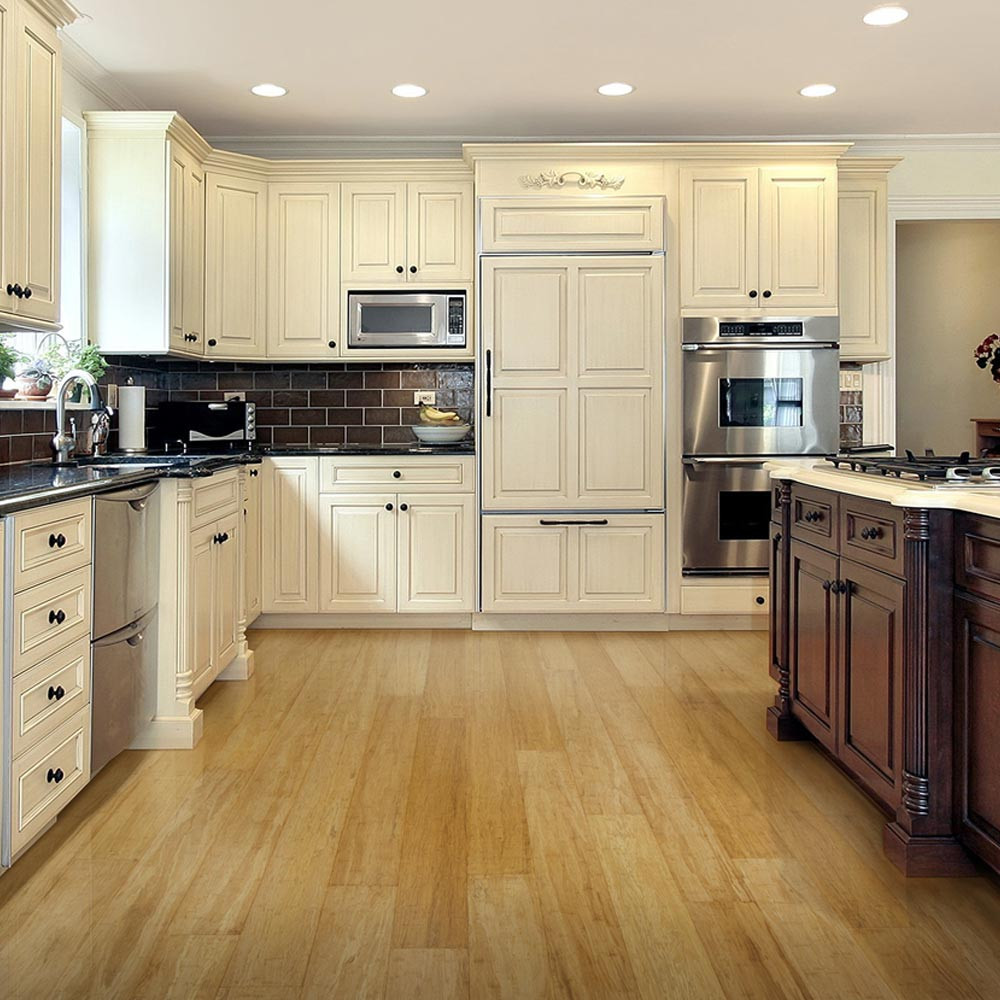
  • Bamboo Flooring – Bamboo is a fast-growing grass, highly renewable, and gives a modern look. Strand-woven bamboo is very durable for busy homes.
  • Reclaimed Hardwood – Uses existing materials, reducing demand for new trees. Each plank has rustic character, perfect for farmhouse or vintage kitchens.

🏡 VOC Ratings and Healthy Home Tips

Not all “natural” floors are safe for indoor air. Choose low-VOC or zero-VOC certified flooring to avoid harmful chemicals:

  • Look for certifications like FloorScore, Greenguard GOLD, or CARB Phase 2 compliance.
  • Pick water-based finishes and adhesives.
  • Avoid vinyl or laminate with high formaldehyde or phthalates unless labeled low-emission.

Eco-friendly kitchen flooring isn’t just about materials — it’s about keeping your family healthy and improving indoor air quality.

15 Kitchen Flooring Ideas for 2025

  1. Wide Plank Hardwood Flooring

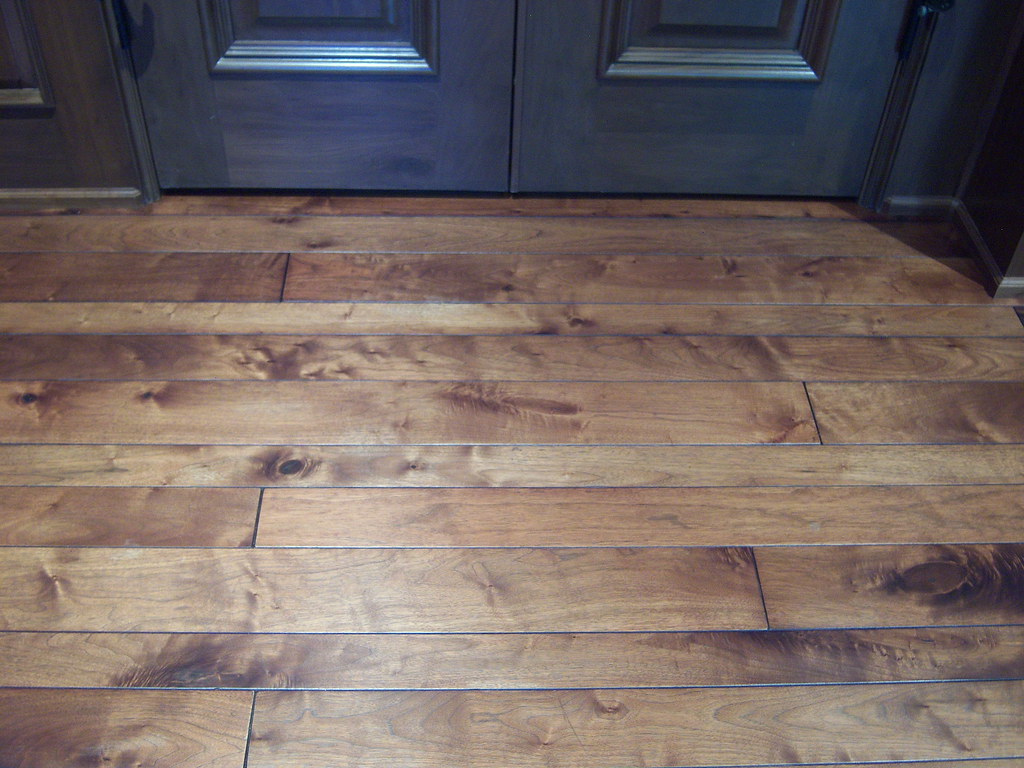
    Wide plank hardwood floors, like oak or maple, make kitchens feel open. They show natural wood grains, adding warmth and style. Explore our Hardwood Flooring options

    Wide Plank White Oak Flooring - Canada's #1 Wide Plank Flooring ...

  2. Herringbone Pattern in Luxury Vinyl Plank

    Luxury vinyl planks in herringbone pattern offer classic looks with modern strength. They’re stylish and resist moisture and wear. Discover our Luxury Vinyl Plank selections

    Howdens on Instagram:

  3. Matte Finish Porcelain Tiles

    Matte finish porcelain tiles give a sleek look and hide smudges, perfect for busy kitchens. Browse our Porcelain Tile collection

    Milestone Ivory Matt Modern Porcelain Floor tile, Pack of 8, (L)307mm ...

  4. Seamless Indoor-Outdoor Transitions

    Using the same flooring, like porcelain tiles, from kitchen to outdoor areas creates a smooth flow, great for open living. View our Laminate Flooring options

    Walls and Floors on Instagram:

  5. Natural Stone-Look Porcelain Tiles

    Porcelain tiles that look like natural stone, such as marble or slate, offer luxury with durability and less upkeep. Explore our Porcelain Tile selections

    25 best Natural stone look porcelain tile images on Pinterest ...

  6. Large Format Tiles

    Large tiles mean fewer grout lines, creating a seamless and spacious kitchen look. Check out our Ceramic Tile collection

    Tiles Talk: Your Guide to Large Format Floor Tiles - Perini

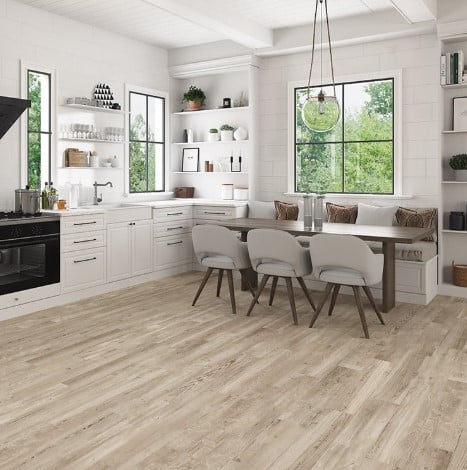
  7. Wood-Look Porcelain Tiles

    These tiles combine wood look with porcelain strength, making them good for busy kitchen areas. Discover our Porcelain Tile options
    How to Choose the Right Wood-Look Tile Color - Arizona Tile

  8. Patterned & Decorative Tiles

    Bold patterns, like geometric designs, add personality to kitchen floors. Browse our Porcelain Tile collection

    Fancy Kitchen Floor Tiles – Clsa Flooring Guide

  9. Sustainable Materials

    Eco-friendly choices like bamboo or reclaimed wood are stylish and help the planet. Explore our Hardwood Flooring selections
    20 Beautiful Bamboo Flooring Kitchen - Home Decoration and Inspiration ...

  10. Textured Finishes

    Floors with textures, like hand-scraped wood, add depth and character to kitchens. Discover our Hardwood Flooring options

    Textured 1-Strip Plank Cambridge Amber Oak PERGO Max Laminate Flooring ...

  11. Neutral & Earthy Tones

    Colors like beige and soft greys are popular, matching many kitchen styles. View our Porcelain Tile collection

    33 Neutral Kitchen Design Ideas for a Calming Aesthetic

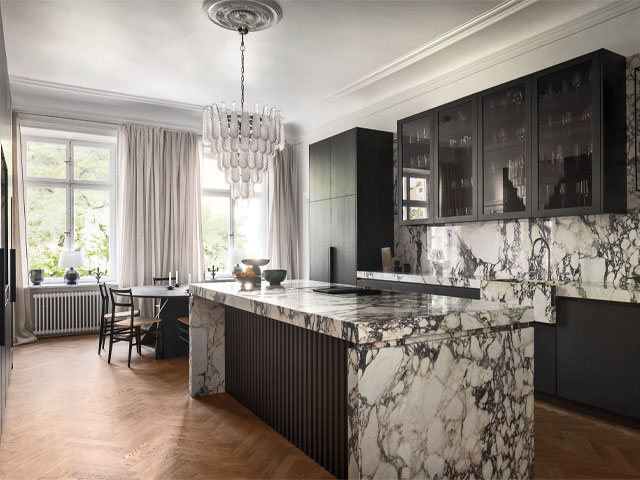
  12. Mixed Material Designs

    Mixing different floor materials, like wood and tile, lets you create zones in open kitchens. Explore our Hardwood Flooring selections
    Mixed material kitchen: how to get the look - Goodhomes Magazine ...

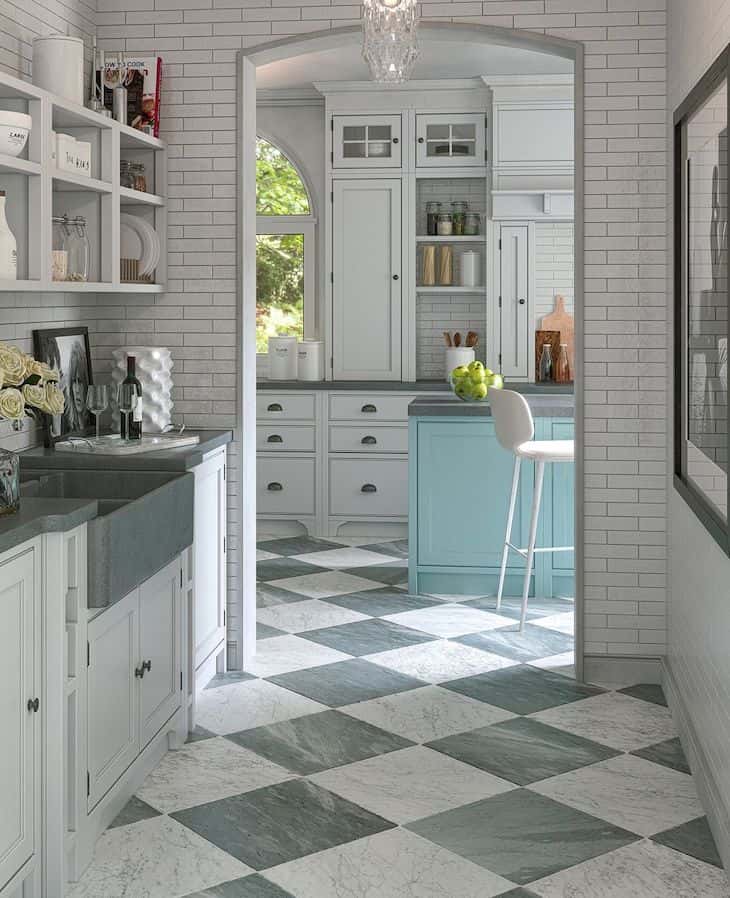
  13. Checkerboard Patterns

    Classic checkerboard floors are back, adding a timeless touch. Browse our Porcelain Tile collection
    Where to Use the Checkerboard Floor Trend in Your Home - Farmhousehub

  14. Terra-Cotta Tiles

    Terra-cotta tiles bring a warm, rustic feel to kitchens. Discover our Porcelain Tile options

    Traditional Saltillo Terra Cotta floor tile in a beautiful white ...

  15. Engineered Hardwood Flooring

    Engineered hardwood looks like real wood but is more stable and moisture-resistant, good for kitchens. Explore our Engineered Hardwood Flooring selection
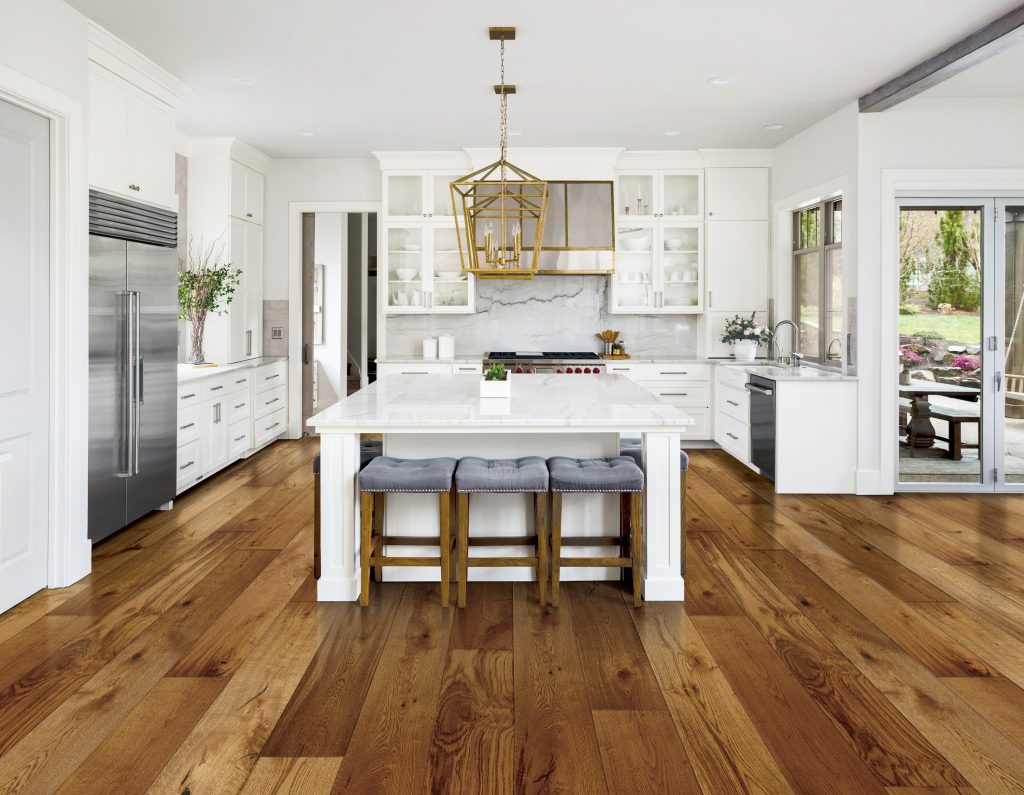
    Best Hickory Engineered Hardwood Flooring | Viewfloor.co

Final Tips Before You Buy Kitchen Flooring

Before you decide, take time to check a few key things. These steps can help save time, money, and trouble when picking the best kitchen flooring.

📦 1. Buy Extra Material for Cuts and Waste

Always get 10–15% more flooring than your kitchen’s size. This covers waste from cuts, errors, and future fixes. Running out during installation — especially with patterns or discontinued stock — can delay your whole project.

💡 2. Try Flooring Samples in Your Kitchen Lighting

Flooring can look different in daylight, artificial light, and under-cabinet LEDs. What looks warm in the store might appear too cool or dull in your home. Place samples on the floor and check them at different times to see how they look with your kitchen’s colors and lights.

🛡️ 3. Know Manufacturer Warranties

Not all warranties are the same. Read the details to know:

  • If it covers water damage, wear, fading, or installation issues.
  • If you need professional installation to activate the warranty.
  • What can void the warranty — like using wrong cleaners or DIY installs on some products.

🎯 Bonus Tip: Pick Flooring That Fits Your Lifestyle

  • Busy family home? Choose waterproof and low-maintenance options (like LVP or tile).
  • Design-focused kitchen? Look into trendy styles like herringbone vinyl or natural stone-look tiles.
  • Eco-conscious household? Choose cork, bamboo, or reclaimed wood with low-VOC certifications.

Do You Need Help Choosing or Installing Your Kitchen Flooring?

After checking out the best kitchen flooring materials, costs, and design ideas, you’re closer to making a lovely and practical kitchen. If you want experts to handle the measuring, prep, and installation, our team is here to assist.

We handle everything — from subfloor inspection and moisture testing to precise installation of luxury vinyl plank, porcelain tile, engineered hardwood, laminate, and more.

We’ll help you pick the right kitchen flooring based on your lifestyle, layout, and budget — whether you want waterproof durability, low-maintenance comfort, or trendy design.

Click here to contact us today to schedule your free in-home consultation and find out if we serve your area!