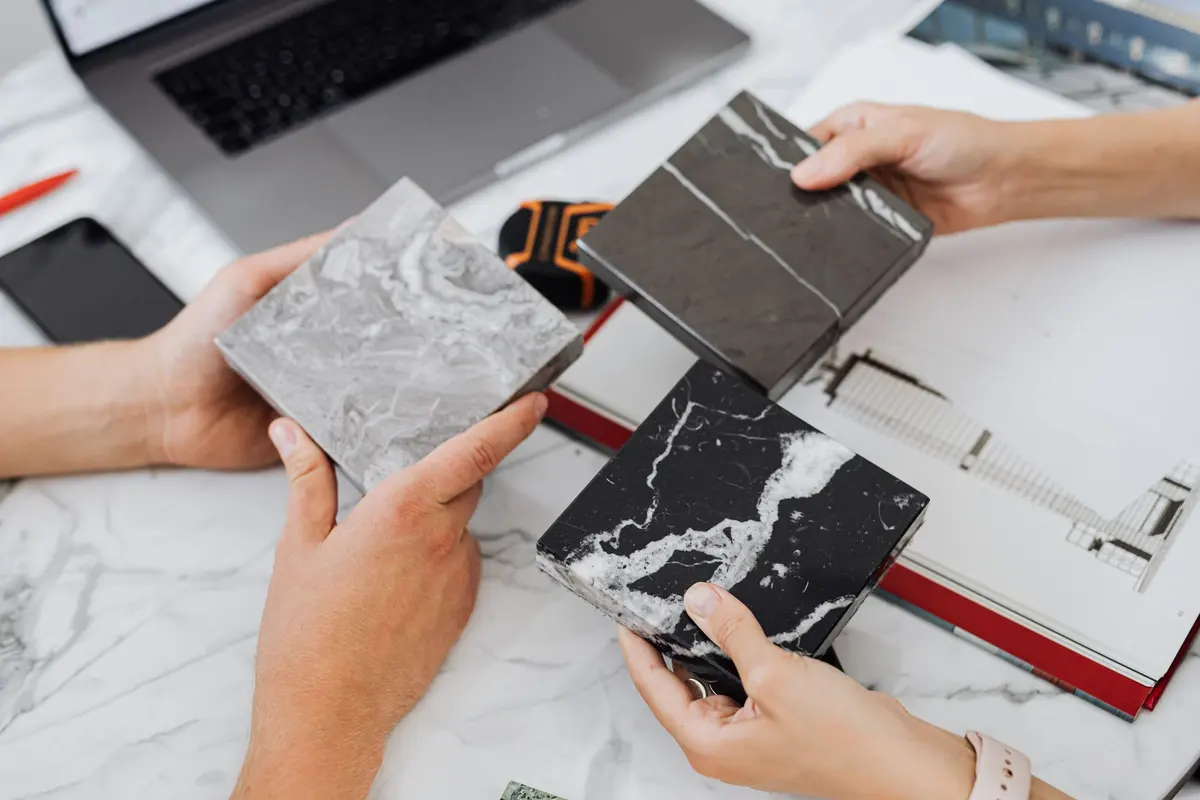
Luxury vinyl plank (LVP)
LVP took over family houses for a straightforward reason: it absorbs what kids, dogs and a Texas backyard hand it, and a tipped water bowl means nothing to it. The catch is that a rigid plank performs only as well as the slab underneath it, because no core sold today bridges a wavy floor. Choosing between a stone core and a foamed core is the other half of the decision, and it turns on the room.
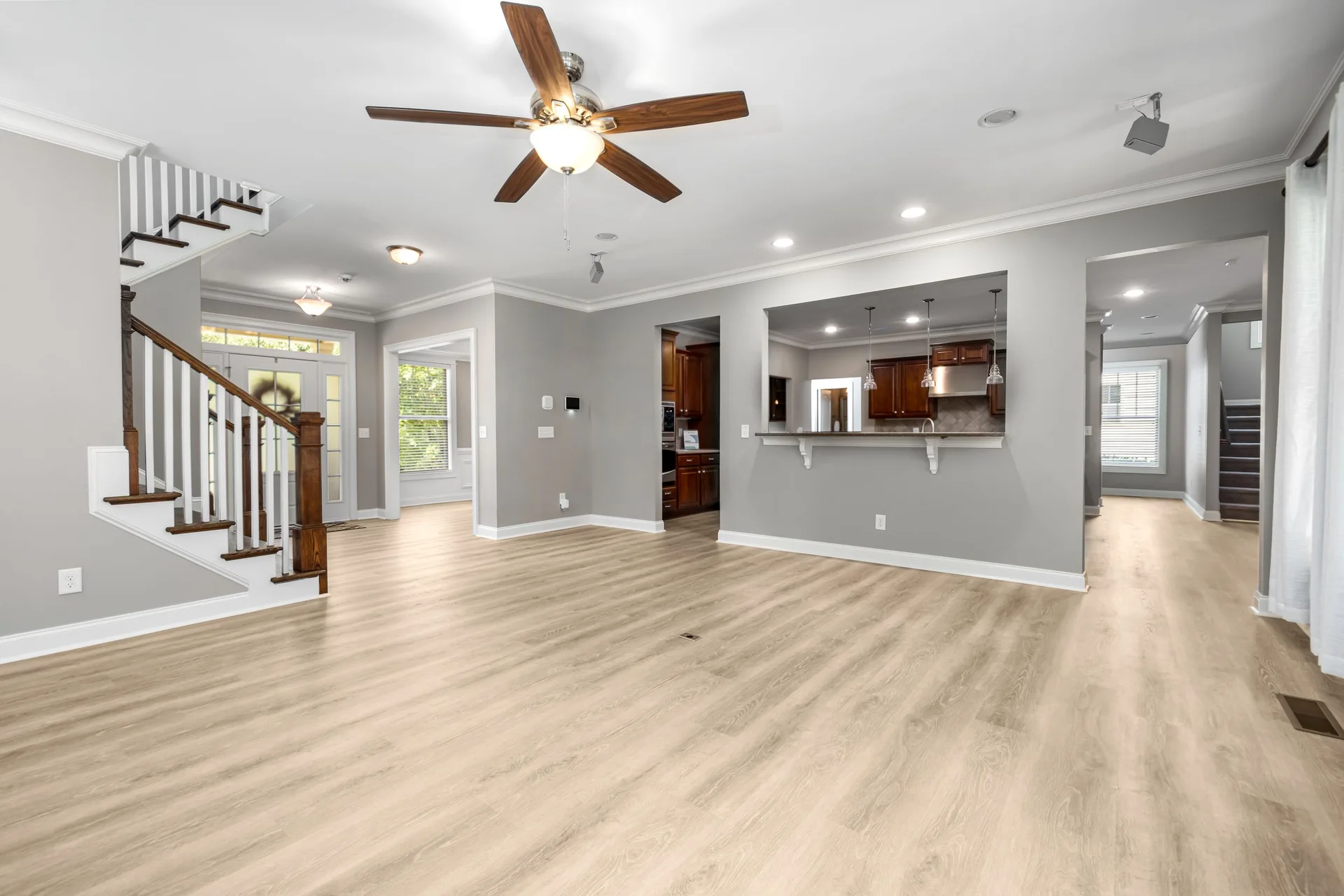
SPC and WPC cores behave differently
Waterproof describes the plank, not the room
Every luxury vinyl plank is the same four things: a backing, a rigid core, a printed film carrying the wood or stone image, and a clear wear layer over the top.
Waterproof describes the plank, not the room. A plank will sit in a bucket for a week and come out unchanged, which is why it works where wood does not, but water still travels to the perimeter gap and under the floor if there is enough of it.
SPC is dense, stable and hard underfoot
SPC stands for stone-plastic composite: limestone powder bound in PVC and pressed dense. It is thin, very stable when a room heats up, and it shrugs off point loads, so a refrigerator foot or a piano leg does not leave a permanent dimple. That makes it the right core for a sunroom, a west-facing living room, or any slab that gets warm in the afternoon.
What you give up is comfort. SPC is hard and slightly loud underfoot, a firm floor rather than a forgiving one.
WPC is softer to stand on but dents
WPC uses a foamed wood-plastic core instead. It is thicker, warmer, quieter and softer to stand on, which matters in a kitchen where somebody cooks for an hour at a stretch. In exchange it dents more readily under concentrated weight and expands more in a hot room, making it a poor choice behind south-facing glass.
Neither core is better than the other. They answer different rooms, and most lines offer the same look on both cores.
What's included
- SPC and WPC cores specified room by room
- Wear layers from residential through commercial grade
- Slab ground and patched to flatness tolerance before install
- Expansion gaps held at jambs, hearths and toe kicks
- Glue-down installation for long open runs and small wet rooms
- Continuous runs from hallway into bath and laundry
- Silicone-sealed perimeters and toilet flanges
- Single planks replaced without redoing the floor
What the wear layer number actually tells you
Mils predict how the surface survives grit
The wear layer is the clear film on top, measured in mils, and it is the most useful number on the carton. It predicts abrasion: grit tracked in off a gravel drive, dog claws, the casters on a desk chair.
Six mil is turnover-grade material for a rental. Twelve mil is a sound family floor. Twenty mil and above belongs in an entry that opens onto dirt, a house with several large dogs, or anything commercial, and past that the gains flatten out.
Plank thickness is not the wear layer
The number most people quote is the wrong one. The millimeter figure printed large on the box, six or seven or eight, is the total thickness of the plank. It tells you about rigidity and how the floor feels underfoot, not how the surface survives.
A thick plank with a thin wear layer scuffs early, and a wear layer quoted without a plank thickness leaves you guessing whether the core is stiff enough for your slab. Ask for both, then ask which core it is.
No site-applied finish to wear through
This is why LVP became the default in houses with children and animals. There is no site-applied finish to wear through the way there is on wood, so claws never open dull lanes down a hallway. A bowl that gets tipped twice a week never reaches the subfloor. It cleans with a damp mop rather than a specialty product. Wood asks to be protected. Vinyl asks for very little.
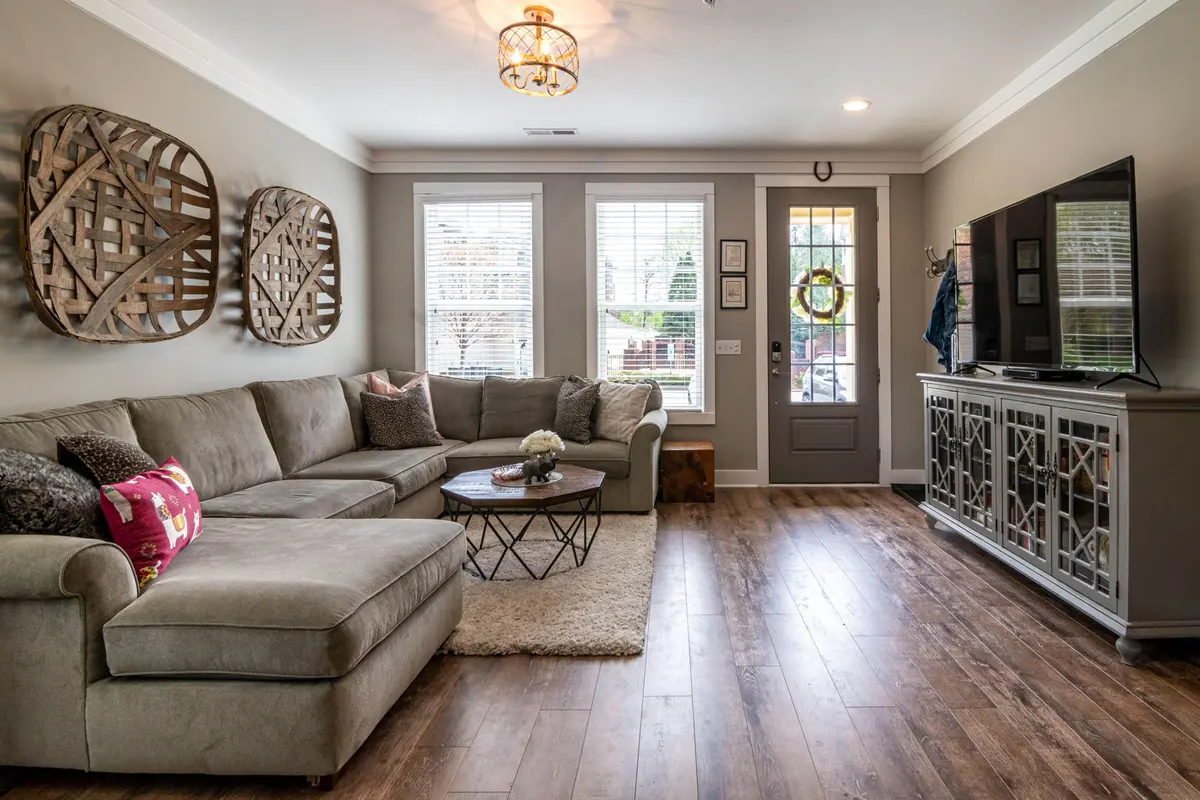
Flatness, telegraphing and honest limits
A rigid core bridges nothing on a wavy slab
A rigid core plank is four to six millimeters thick and it bridges nothing. Lay a floating floor over a dip and it reproduces the dip: springy where it is unsupported, ticking when weight crosses the hollow, and within a year or two the locking joints there work loose and open.
Manufacturers publish a flatness tolerance, commonly three-sixteenths of an inch over ten feet, and it is a warranty condition. On Blackland clay the ground under these slabs swells and shrinks seasonally, so a fifteen-year-old house in Terrell can sit well outside that number while still looking level. High spots get ground down and low spots filled with patch first.
Peaking planks mean the floor was pinned
The second failure mode is heat. A floating floor has to be free to move, which means a gap at every wall, jamb, toe kick, hearth and pipe, hidden behind trim rather than eliminated. Cabinets and islands sit on the slab and the floor stops short of them; running plank underneath pins the whole field.
When planks peak in the middle of a room in August, it is almost never a defective product. It is a floor that was given nowhere to go.
Sun fade, scratches and the hollow tap
Where it genuinely falls short is worth saying plainly. Direct sun through a large window fades the print over years and heats the plank enough to move it; SPC handles that better, but no vinyl enjoys it. A scratch through the wear layer is permanent, because there is nothing below it but the printed image. It does not carry the resale weight of real wood. And in a large open room it can sound like what it is, a hollow tap under a hard heel.
What homeowners say
"All About Floors did an amazing job on our vinyl wood floors. It was all done within a day and all looked perfect when they were finished. Would highly recommend using them!"
Nicole Roberts · via Google "All About Floors is amazing to work with! We recently had our entire flooring replaced and they not only did a wonderful job, the support and aftercare has been top notch! Highly recommend"
J Shoe2 · via Google
Luxury vinyl plank (LVP) questions
If it is waterproof, can we put it anywhere water goes?
The plank is waterproof; the installation is water resistant. Spills, mopping, a dog that drinks messily and a bathroom floor are all fine indefinitely. A supply line that floods overnight is a different event, because water runs through the perimeter gap and sits on the slab under a floating floor, and it has to be brought up to dry. Vinyl survives that better than wood does.
Can we run it into the bathroom and laundry?
Yes, and it is the most common request we get. We keep the run continuous from the hallway so there is no threshold to trip over, hold the expansion gap behind the baseboard, seal the perimeter and the toilet flange with silicone, and cut clean around the washer feet. In a small room a glue-down plank is often better, since a floating field needs area to behave.
Will it fade next to our west-facing windows?
It can over a period of years, and it is the complaint we hear most about vinyl in this part of Texas. The print sits under a clear layer, and hard afternoon sun lightens it, most visibly where a rug shaded part of the floor and then gets moved. Solar screens, low-E glass or a shade during the worst hours slow it down.
Should we float it or glue it down?
Floating suits most houses and most rooms, and it is faster and more forgiving of a slab that still moves. Glue-down earns its keep in three places: very long open runs where a floating field would need a break, small rooms with too little area to stay stable, and anywhere heavy rolling loads cross the floor. It also sounds more solid.
What happens if we drop something and gouge a plank?
One plank comes out and a new one goes in, which is a real advantage of this product. On a glued floor the damaged plank is cut free and reset in fresh adhesive. On a floating floor it is unlocked back from the nearest wall, or cut out and replaced with a glued-in board. Keep a carton of leftovers, because dye lots shift over time.
Flexible financing available
Wisetack and Synchrony
Luxury vinyl plank (LVP) by city
- Rockwall Luxury vinyl plank (LVP)
- Forney Luxury vinyl plank (LVP)
- Fate Luxury vinyl plank (LVP)
- Terrell Luxury vinyl plank (LVP)
- Royse City Luxury vinyl plank (LVP)
- Heartland Luxury vinyl plank (LVP)
- Heath Luxury vinyl plank (LVP)
- Sunnyvale Luxury vinyl plank (LVP)
- Kaufman Luxury vinyl plank (LVP)
- Crandall Luxury vinyl plank (LVP)
- McLendon-Chisholm Luxury vinyl plank (LVP)
- Mabank Luxury vinyl plank (LVP)
- Talty Luxury vinyl plank (LVP)
- Combine Luxury vinyl plank (LVP)
- Kemp Luxury vinyl plank (LVP)
- Wills Point Luxury vinyl plank (LVP)
- Rowlett Luxury vinyl plank (LVP)
- Mesquite Luxury vinyl plank (LVP)
- Garland Luxury vinyl plank (LVP)
Other floors we install
-
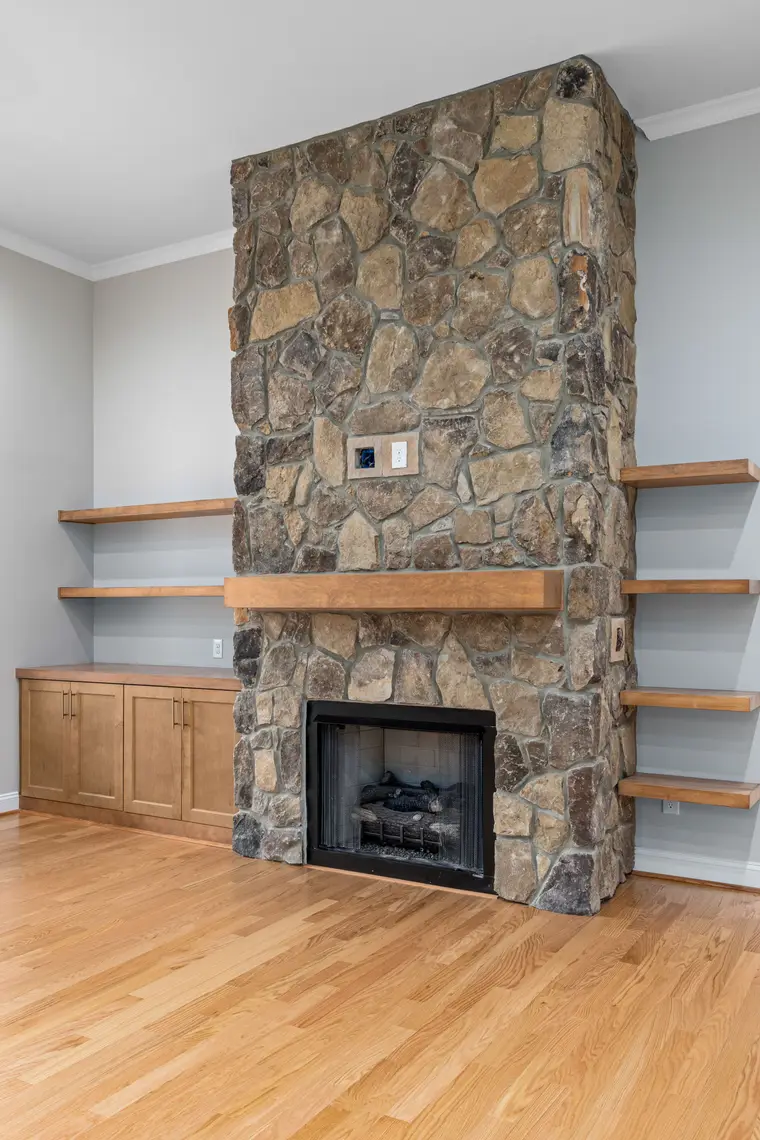
Hardwood installation
Solid and engineered hardwood installed over slab and pier-and-beam homes in Forney, Kaufman and Rockwall counties and the wider Dallas metro.
Learn more → -
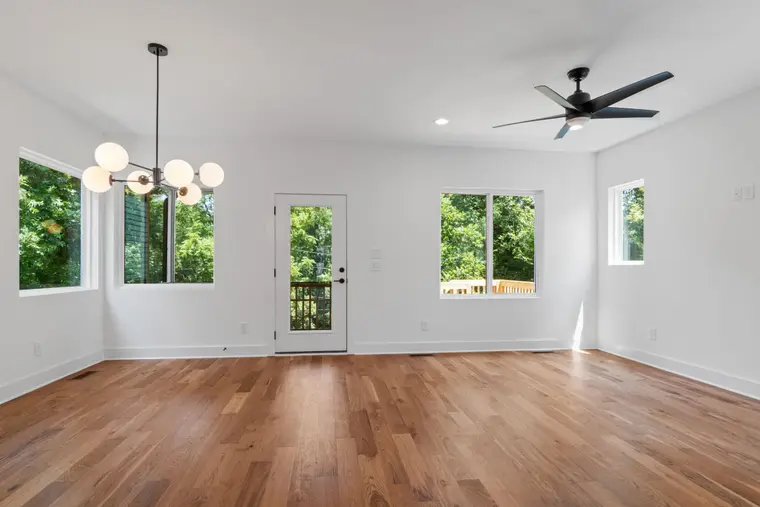
Hardwood refinishing & sanding
Sanding and refinishing existing hardwood floors across Forney, Kaufman and Rockwall counties, starting with an honest read on whether yours can be saved.
Learn more → -
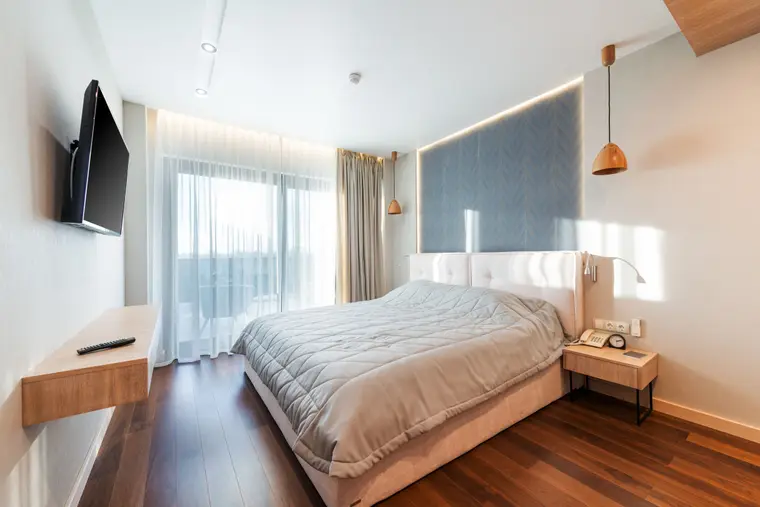
Laminate
Laminate flooring installed across Forney, Kaufman and Rockwall counties, with straight answers on AC ratings and the rooms it does not belong in.
Learn more → -
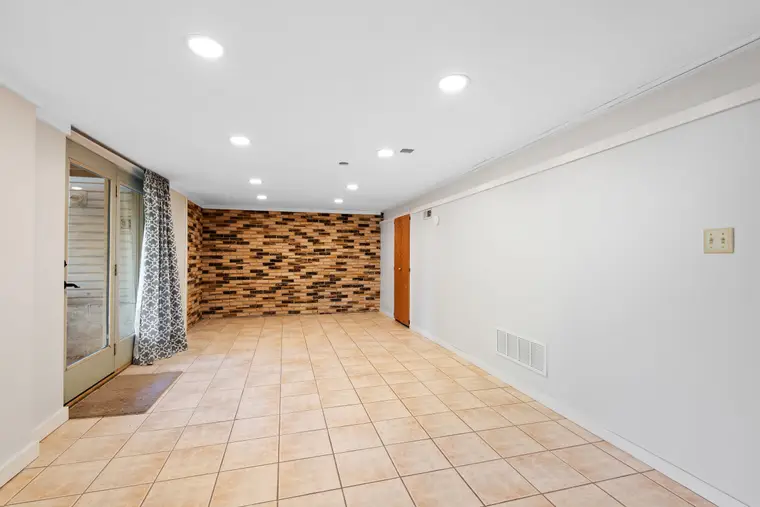
Tile
Porcelain, ceramic and natural stone tile set over properly prepped slabs in Forney and across the Dallas metro. Free in-home samples.
Learn more → -

Carpet
Carpet and pad for bedrooms, stairs and upstairs living areas, measured, seamed and power stretched throughout Forney and Kaufman County.
Learn more → -
Floor removal & demo
Tile, thinset, carpet and old vinyl removed and hauled off, and the slab ground flat, for homes across Forney, Kaufman and Rockwall counties.
Learn more →
Ready for floors you'll actually love?
Free in-home estimate, clear pricing, and a crew that shows up when we say we will.