Tile
Tile is the only floor in a Texas house that does not care about standing water, a dog bowl that tips over, or a west window that cooks the room every afternoon. What it does care about is the slab underneath it. Most of the work in a tile job that lasts happens before the first tile is set.
Porcelain, ceramic and natural stone compared
Porcelain is denser and barely absorbs water
Porcelain is fired hotter and denser than ceramic, with water absorption at or below half a percent. That is why it works on floors, in showers and on a covered patio.
Through-body porcelain carries its color all the way through, so a chipped edge does not flash white. Rectified porcelain is cut to a precise edge after firing, which is what lets a floor be set with narrow joints and read as one surface.
Ceramic glaze wears through in walkways
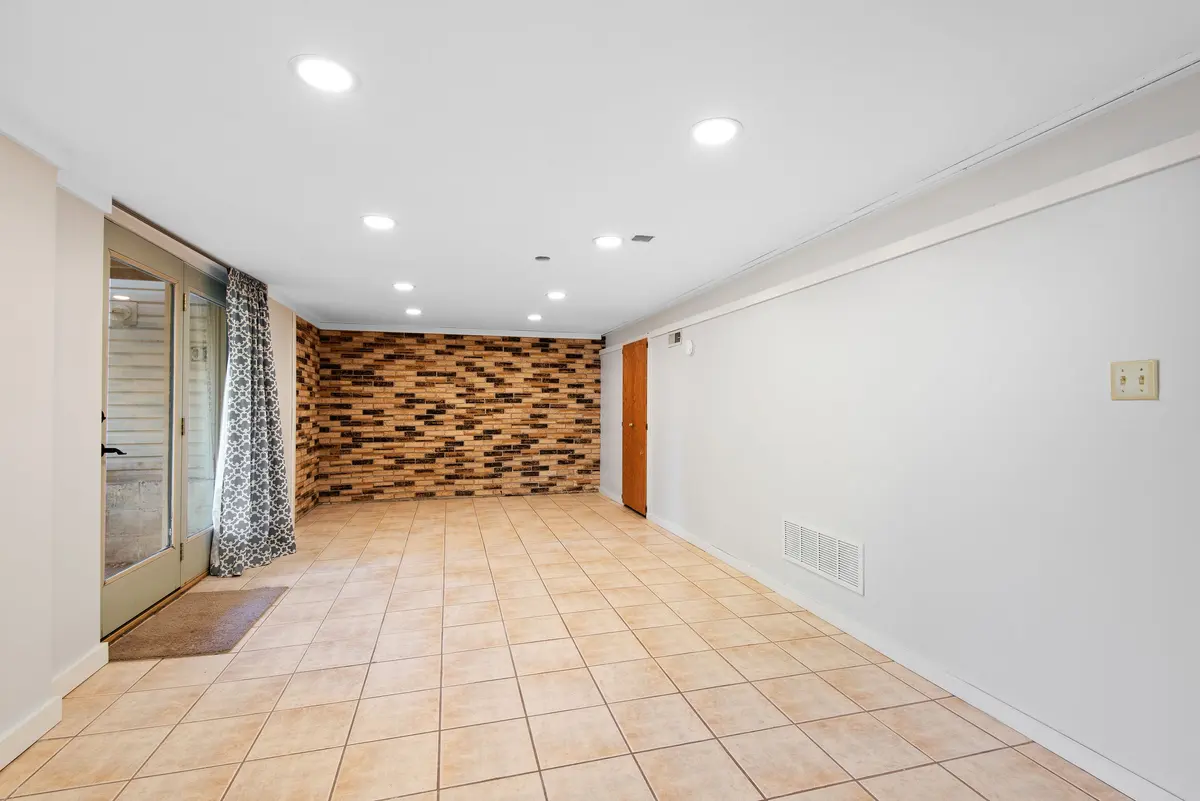
Ceramic has a softer body, a glazed face and higher absorption. It is a good wall tile and a fine floor in a guest bath. On a busy floor the glaze wears through in the walkway and a chip shows the paler clay underneath. It is the lighter-duty product, and in a quiet room that trade is reasonable.
Stone needs blending, sealing and care
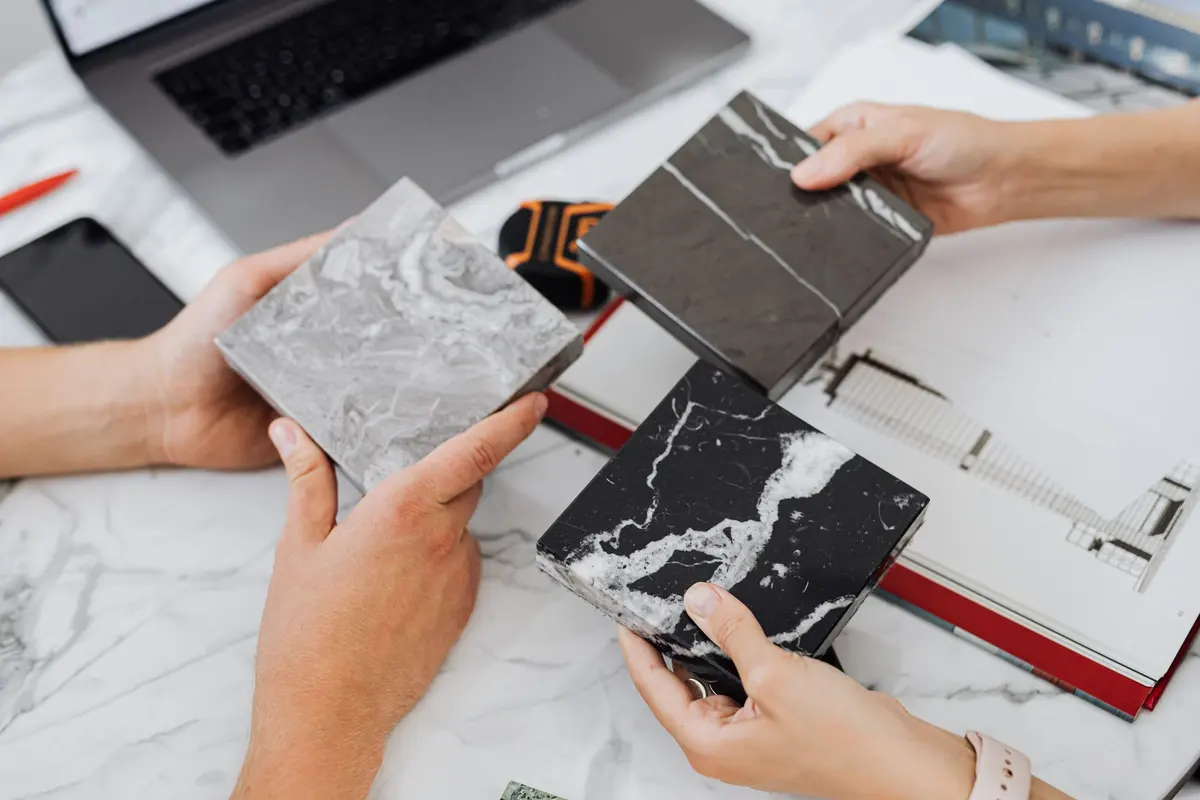
Natural stone covers travertine, marble, limestone, slate and granite. Every piece is different, which is the appeal and the complication: the layout gets dry-laid and blended so one dark box does not land in a single corner.
Stone is porous, needs sealing and resealing, and the calcite stones etch dull wherever lemon juice or a vinegar cleaner sits. Wendy has fourteen years in tile and design and is candid about which rooms a soft stone belongs in.
What's included
- Porcelain, glazed ceramic and natural stone
- Large-format and rectified tile setting
- Slab grinding and patching to flatness tolerance
- Uncoupling and crack-isolation membranes
- Soft movement joints at perimeters and slab joints
- Grout color selection and sealing
- Shower pans, curbs and wet-area waterproofing
- Baseboard reset and door casing undercuts
The rooms where nothing else comes close
Wet rooms have no core to swell
Wet areas first. A shower floor, a tub surround, a mudroom off the garage, a laundry with a washer that will eventually leak. Tile has no wear layer to abrade through and no core to swell, so standing water is a mopping problem rather than a replacement.
It does not fade or move with the season
Running tile through the main living areas makes sense here for reasons that have nothing to do with water. Slab-on-grade construction gives it the rigid base it needs, without the deflection a joisted floor introduces. Tile does not fade under afternoon sun through a west-facing window, and it does not move with the humidity swing between a February morning and an August afternoon, the swing that opens seasonal gaps in solid wood.
The trade-offs are worth saying out loud: a dropped glass does not survive it, it stays cool underfoot in January, and grout darkens in the walkways over the years, which is why grout color belongs in the up-front conversation.
Flatness, membranes and grout decisions
Large format doubles the flatness demand
Flatness tolerance is the thing homeowners never hear about. The requirement tightens sharply once any edge of the tile reaches fifteen inches: from a quarter inch in ten feet for smaller tile down to an eighth of an inch in ten feet for large format. A slab flat enough for a twelve-inch square will produce visible lippage under a twelve by twenty-four plank, and lippage is what you catch with a bare toe.
Prep is therefore most of the labor on a large-format floor, with high spots ground down and low spots filled before any thinset is mixed. It is also why plank tile is set on a third offset rather than a running half bond, since long tiles crown slightly through the middle.
Uncoupling membranes let the slab move
Houston Black clay under most of Kaufman and Rockwall counties swells when wet and shrinks when dry, and the slab above it moves with the seasons. Tile is rigid and does not want to move at all. An uncoupling membrane, a thin dimpled sheet bonded to the slab with the tile set on top, lets the two move independently so a hairline crack in the concrete does not telegraph up through the floor.
Over an existing crack or a control joint we add a crack-isolation membrane, and any joint in the slab carries through the finished tile as a soft movement joint filled with sealant rather than grout.
Joint width and color are a maintenance choice
Grout is the last set of decisions and the one people rush. Joint width follows the tile: rectified porcelain can run tight, while stone or a handmade-look tile with variation in edge and thickness needs a wider joint to absorb it.
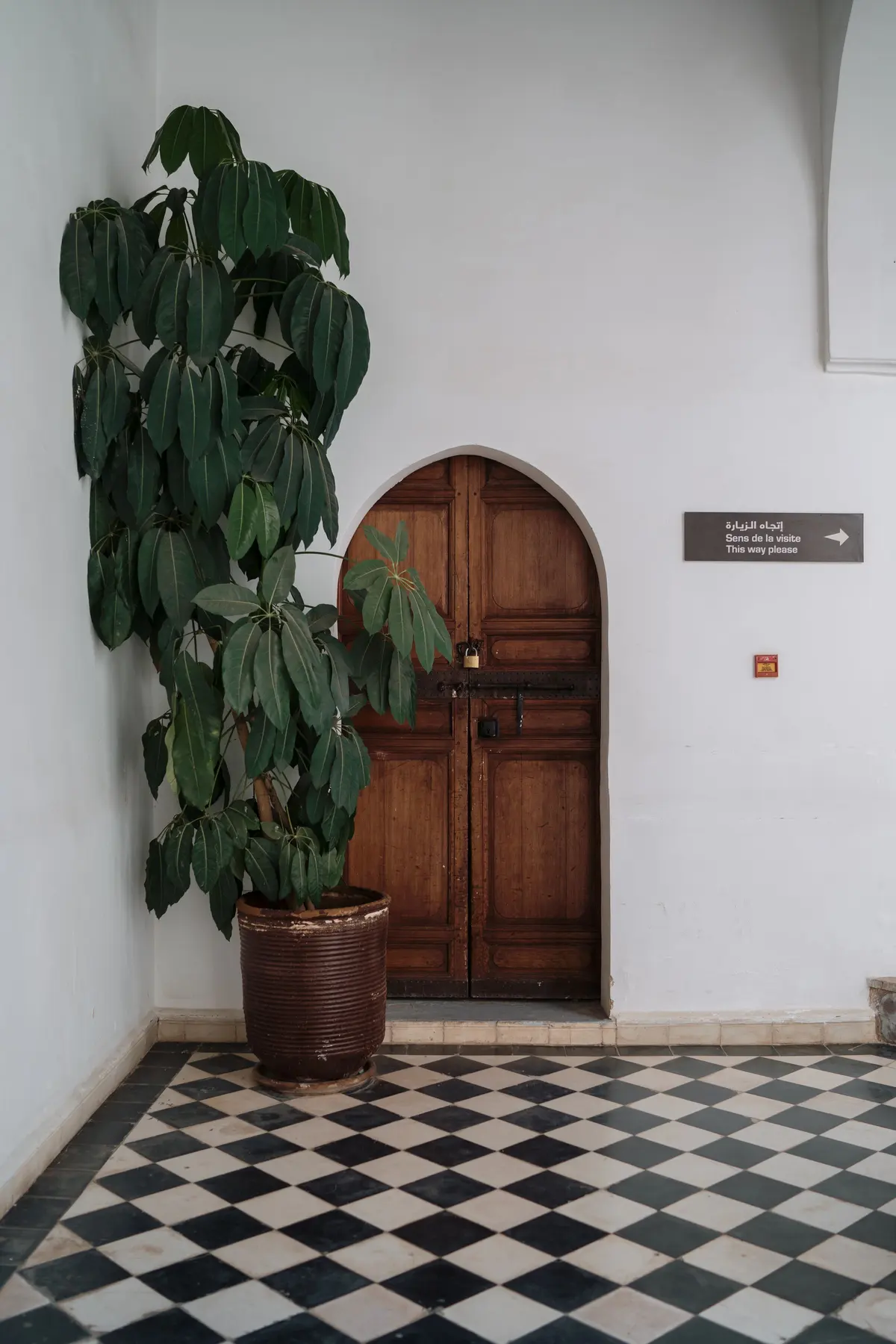
Color carries a maintenance consequence. Grout matched to the tile makes the floor read as one plane; a contrasting grout draws the pattern and asks every cut to be perfect. Cement grout in a shower or entry gets sealed once cured, and porous stone is sealed before grouting so the grout does not stain the face.
What homeowners say
"All About Floors is amazing to work with! We recently had our entire flooring replaced and they not only did a wonderful job, the support and aftercare has been top notch! Highly recommend"
J Shoe2 · via Google "The team at All About Floors did an absolutely phenomenal job repairing a portion of a floor in my clients' home that nobody else would touch. We are so grateful for Patty and her amazing team!"
Carley Newlin · via Google
Tile questions
Porcelain or ceramic for a main living area?
Porcelain, in almost every case. It is denser, it absorbs almost no water, and a through-body product will not show a pale scar where it chips. Ceramic is a fine wall tile and fine in a guest bath, but on a floor taking the whole family and a dog every day the glaze wears through before you are ready to replace it.
Will tile crack if the slab moves?
It can, which is why the membranes and movement joints exist. An uncoupling membrane lets the slab shift underneath without dragging the tile along, and a soft joint over every control joint gives the floor somewhere to relieve stress. That covers the seasonal movement Blackland Prairie clay produces. No membrane survives structural failure, so a slab that is actively separating gets addressed first.
Does tile and grout need to be sealed?
Porcelain does not, since there is nothing for a sealer to soak into. Natural stone always does, before grouting and periodically afterward. Cement grout is porous and benefits from sealing in showers, entries and kitchens. A high-performance grout is far less absorbent from the day it cures and takes most of that maintenance off your list.
Can you set new tile over the tile we already have?
Sometimes, and it is rarely the right call. The existing tile has to be fully bonded with no hollow spots, and you are adding height that affects thresholds, door swings, appliance clearance and every transition. You also inherit the old floor's flatness and any crack in it. Starting from a properly ground slab usually gives the better result.
Is large-format tile really more work than standard tile?
Yes, and the extra work is in the slab rather than the setting. A large tile cannot bend to follow a dip, so the flatness it demands is twice as tight as the tolerance for a small tile. On a typical Forney slab that means grinding and patching first, and the payoff is fewer grout lines and a floor that reads as one surface.
Flexible financing available
Wisetack and Synchrony
Other floors we install
-
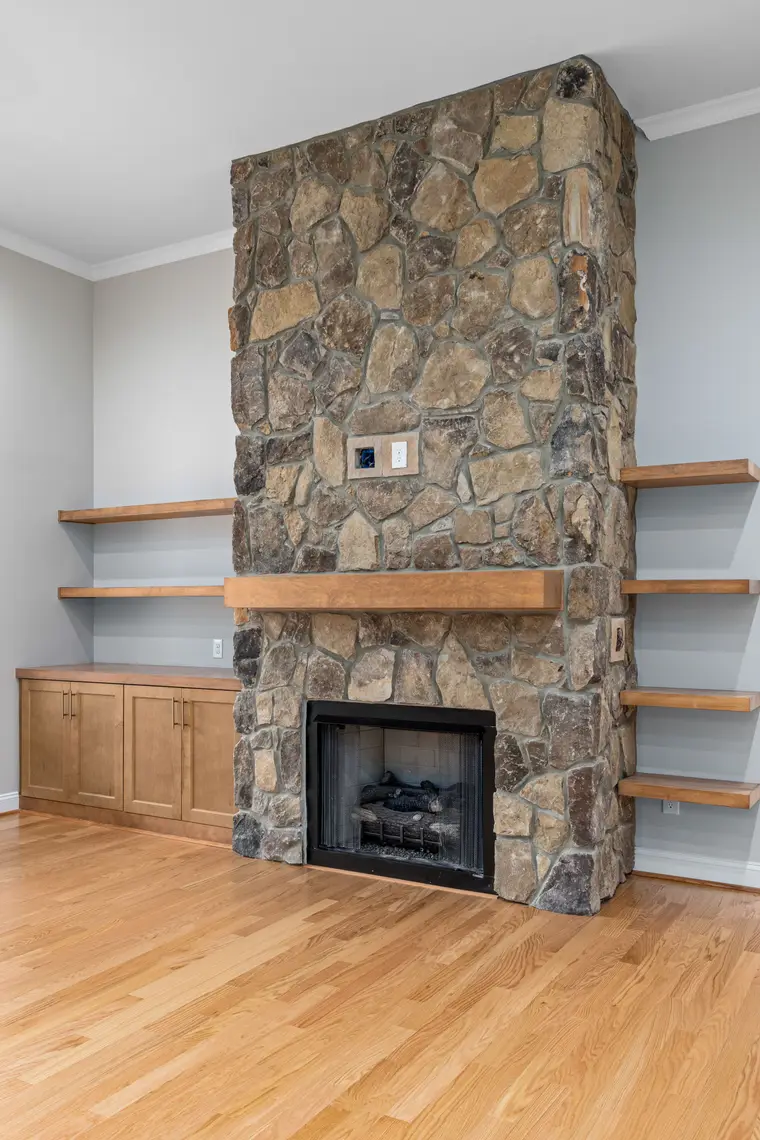
Hardwood installation
Solid and engineered hardwood installed over slab and pier-and-beam homes in Forney, Kaufman and Rockwall counties and the wider Dallas metro.
Learn more → -
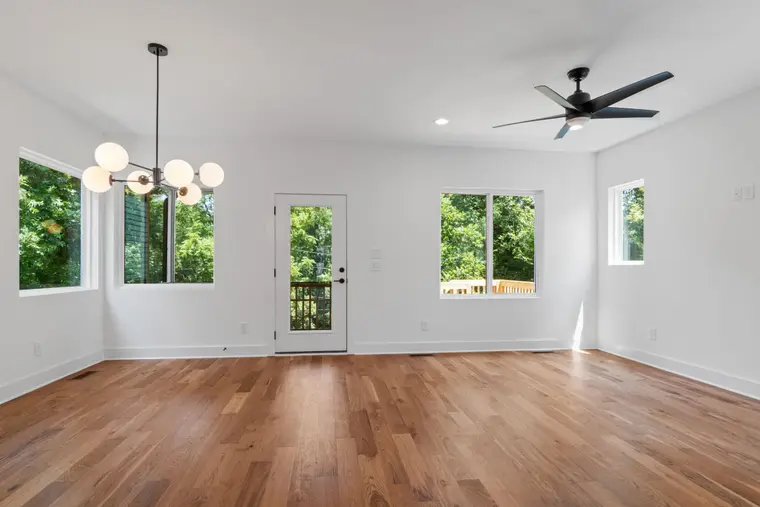
Hardwood refinishing & sanding
Sanding and refinishing existing hardwood floors across Forney, Kaufman and Rockwall counties, starting with an honest read on whether yours can be saved.
Learn more → -
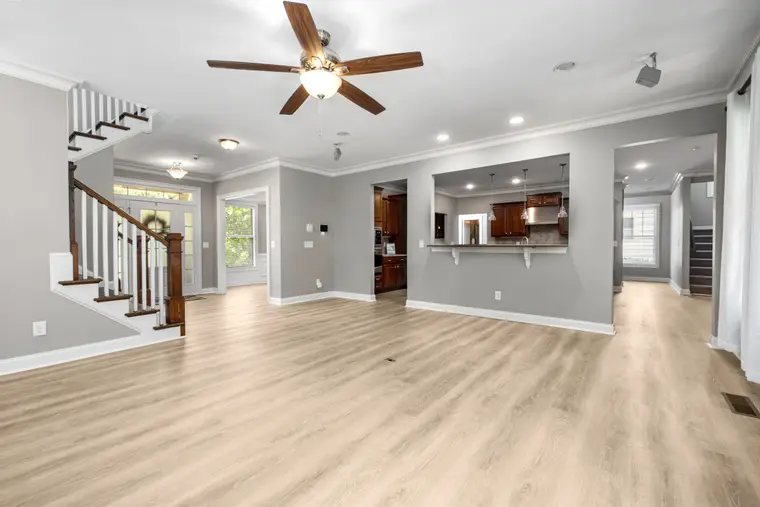
Luxury vinyl plank (LVP)
Luxury vinyl plank installed over slab in Forney, Rockwall and the Dallas metro, with the slab prep that keeps a floating floor tight and quiet.
Learn more → -

Laminate
Laminate flooring installed across Forney, Kaufman and Rockwall counties, with straight answers on AC ratings and the rooms it does not belong in.
Learn more → -

Carpet
Carpet and pad for bedrooms, stairs and upstairs living areas, measured, seamed and power stretched throughout Forney and Kaufman County.
Learn more → -
Floor removal & demo
Tile, thinset, carpet and old vinyl removed and hauled off, and the slab ground flat, for homes across Forney, Kaufman and Rockwall counties.
Learn more →
Ready for floors you'll actually love?
Free in-home estimate, clear pricing, and a crew that shows up when we say we will.