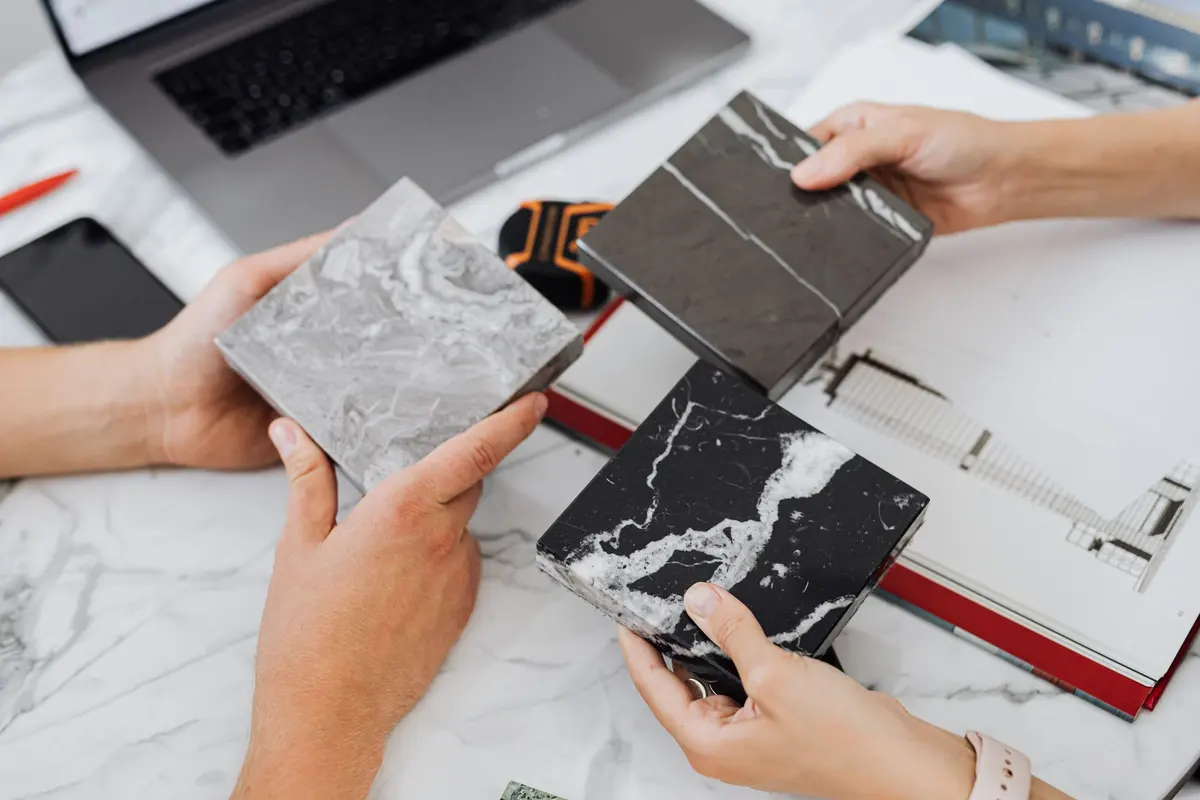
Tile in Garland, TX
Tile is the only floor in a Texas house that does not care about standing water, a dog bowl that tips over, or a west window that cooks the room every afternoon. What it does care about is the slab underneath it. Most of the work in a tile job that lasts happens before the first tile is set. Installed by our own crew across Garland.
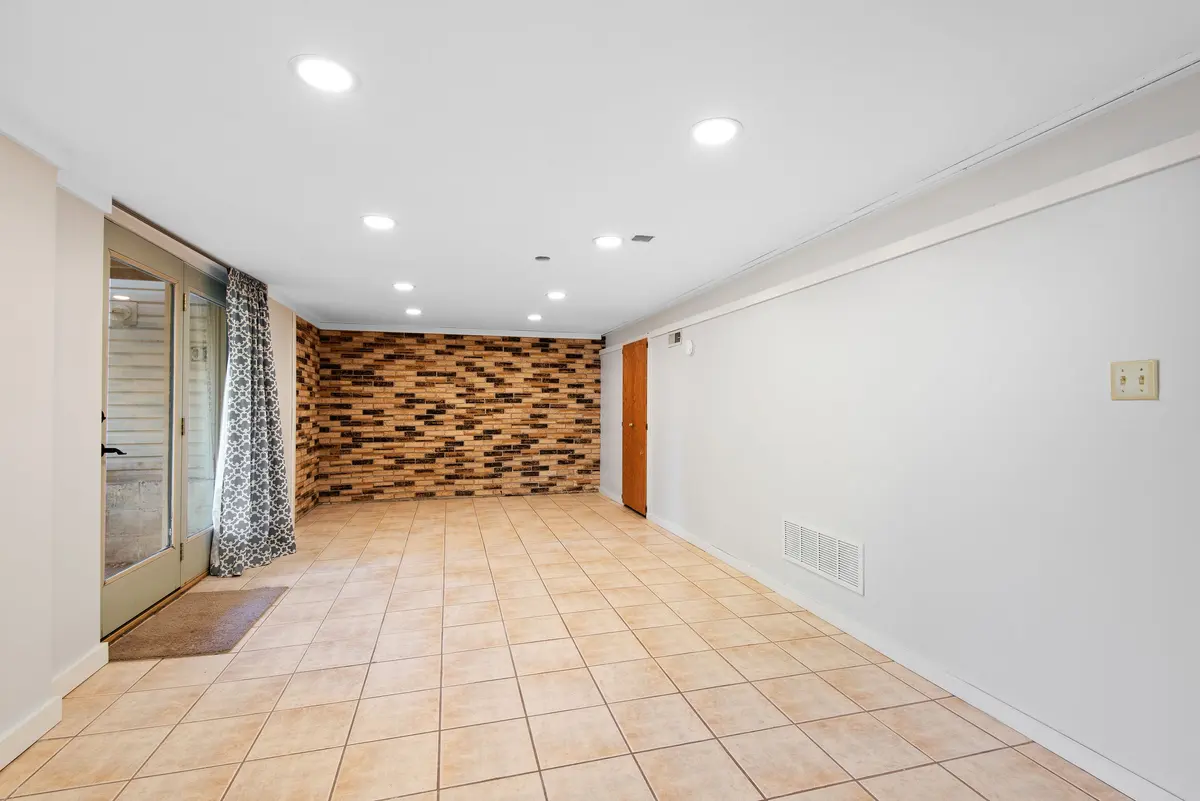
Tile done right, the first time, in Garland.
Homeowners across Garland, TX call All About Floors for tile because every job runs with our own crew, no subcontractors, no surprise charges, and one number to call from first sample to finished floor.
We install tile across Garland and the surrounding area, including Rowlett, Sunnyvale, Mesquite, Rockwall.
What's included
- Porcelain, glazed ceramic and natural stone
- Large-format and rectified tile setting
- Slab grinding and patching to flatness tolerance
- Uncoupling and crack-isolation membranes
- Soft movement joints at perimeters and slab joints
- Grout color selection and sealing
- Shower pans, curbs and wet-area waterproofing
- Baseboard reset and door casing undercuts
Built for Garland homes.
Garland has the widest spread of housing eras of anywhere we work. It held 10,571 people in 1950, nearly quadrupled by 1960, and reached 138,857 by 1980, so the bulk of the city is 1960s and 1970s, with a 1950s core and pre-war houses around the old square. The median construction year is 1978. That spread means a flooring question in Garland has four different answers depending on which side of Duck Creek you are on. We bring samples out from Forney and install with our own crews.
Garland was incorporated in 1891 when the rival settlements of Embree and Duck Creek merged, and the housing still reads in four distinct layers. There is pre-war and pre-1950 stock around the downtown square and the Travis College Hill Historic District. There is a solid 1950s band in Hiland and the older Duck Creek and Embree streets, brick bungalows and early ranch. There is the great mass of the city, 1960s through the 1980s, in places like Camelot, Eastern Hills, and Rose Hill. Then there is the post-2005 growth that came in with Firewheel Town Center. The citywide median lands at 1978.
That first layer is the one that changes the trade. The pre-1950 core is genuinely pier-and-beam over a crawlspace with plank subfloor, and that is better news than most owners expect. Squeaks, soft spots, and sag can be corrected from underneath rather than by tearing up the room. Original oak strip is often thick enough to sand and refinish instead of replace. Where the planks are cupped or gapped we can overlay plywood and start clean. From the mid-1950s on it is slab, and every one of those same complaints turns into grinding and self-leveler instead.
Garland's 1950s-to-1970s bulk sits square inside the vinyl-asbestos tile window. Nine-inch tile and black cutback mastic show up regularly under later carpet, sheet vinyl, and laminate. Pre-1980 resilient flooring gets tested, never assumed, and it never gets sanded or dry-scraped. The 1970s kitchens are frequently layered as well: sheet vinyl over vinyl tile over slab, three eras of flooring in one room.
The 1960s bathrooms and entries here are usually mud-set ceramic on a mortar bed, which is a full day of demolition per room and worth knowing before you commit. Older Garland also has more rooms and smaller ones, so thresholds and seam placement carry more weight than they would in an open 2000s plan out near Firewheel, and doorway heights are tight enough that jambs get undercut when a floor gains thickness.
Tile jobs near Garland
What homeowners say
"All About Floors is amazing to work with! We recently had our entire flooring replaced and they not only did a wonderful job, the support and aftercare has been top notch! Highly recommend"
J Shoe2 · via Google "The team at All About Floors did an absolutely phenomenal job repairing a portion of a floor in my clients' home that nobody else would touch. We are so grateful for Patty and her amazing team!"
Carley Newlin · via Google
Tile in Garland, questions
My older Garland house is pier-and-beam. Is that a problem for new floors?
Usually it is an advantage. The pre-1950 stock around the downtown square and Travis College Hill sits over a crawlspace with plank subfloor, so squeaks, soft spots, and sag can be fixed from below instead of by tearing out the room. Original oak strip is often thick enough to sand and refinish, and where the planks are rough we overlay plywood and lay new goods on a flat, sound deck.
Should I be worried about asbestos under my 1960s Garland floor?
Worth checking, not worth panicking over. Most of Garland was built between the 1950s and the 1980s, and nine-inch resilient tile with black cutback mastic from before the late 1970s often contains asbestos. We test rather than assume, and we never sand, grind, or dry-scrape suspect material. Intact tile can frequently stay put and be covered with a floating floor, which is cheaper and safer than removal.
Why is my Firewheel-area house quoted so differently from my mother's near Duck Creek?
Because they are effectively two different jobs. The post-2005 homes near Firewheel Town Center are open-plan on a young post-tension slab with builder porcelain and carpet. The Duck Creek and Embree streets are 1950s and 1960s, smaller rooms, early slab or pier-and-beam, and often layered old flooring underneath. Same city, thirty to fifty years apart, and the prep is where the difference lands.
Porcelain or ceramic for a main living area?
Porcelain, in almost every case. It is denser, it absorbs almost no water, and a through-body product will not show a pale scar where it chips. Ceramic is a fine wall tile and fine in a guest bath, but on a floor taking the whole family and a dog every day the glaze wears through before you are ready to replace it.
Will tile crack if the slab moves?
It can, which is why the membranes and movement joints exist. An uncoupling membrane lets the slab shift underneath without dragging the tile along, and a soft joint over every control joint gives the floor somewhere to relieve stress. That covers the seasonal movement Blackland Prairie clay produces. No membrane survives structural failure, so a slab that is actively separating gets addressed first.
Does tile and grout need to be sealed?
Porcelain does not, since there is nothing for a sealer to soak into. Natural stone always does, before grouting and periodically afterward. Cement grout is porous and benefits from sealing in showers, entries and kitchens. A high-performance grout is far less absorbent from the day it cures and takes most of that maintenance off your list.
Flexible financing available
Wisetack and Synchrony
Every floor type we install in Garland, TX
-
 Garland
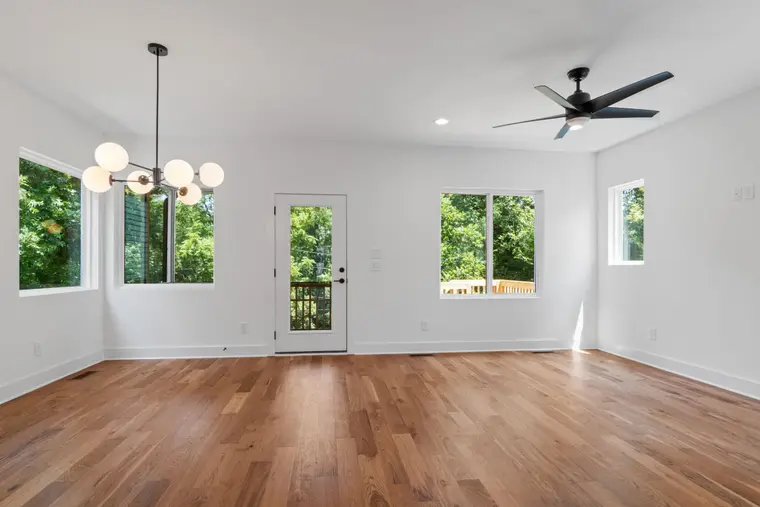
Hardwood installation in Garland
Solid and engineered hardwood installed over slab and pier-and-beam homes in Forney, Kaufman and Rockwall counties and the wider Dallas metro.
Learn more → -
 Garland
Hardwood refinishing & sanding in Garland
Sanding and refinishing existing hardwood floors across Forney, Kaufman and Rockwall counties, starting with an honest read on whether yours can be saved.
Learn more → -
 Garland
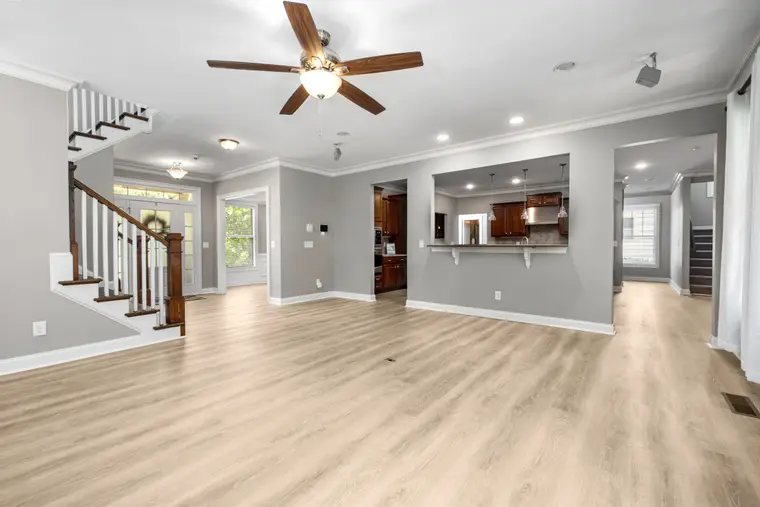
Luxury vinyl plank (LVP) in Garland
Luxury vinyl plank installed over slab in Forney, Rockwall and the Dallas metro, with the slab prep that keeps a floating floor tight and quiet.
Learn more → -
 Garland
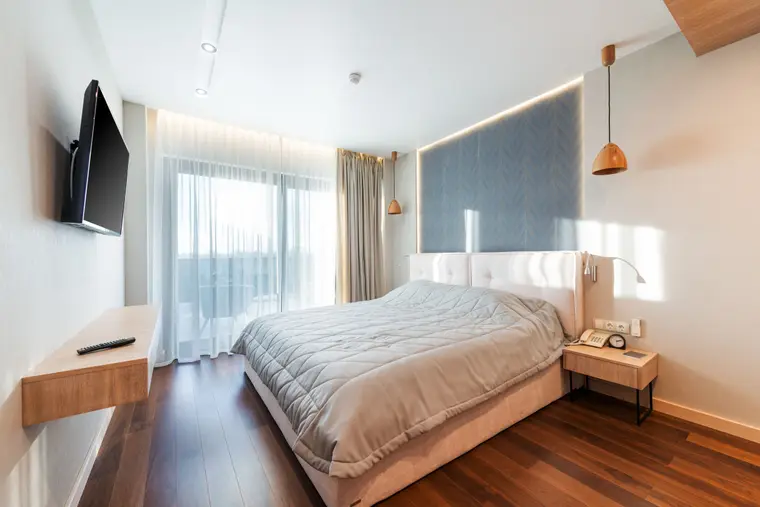
Laminate in Garland
Laminate flooring installed across Forney, Kaufman and Rockwall counties, with straight answers on AC ratings and the rooms it does not belong in.
Learn more → -
 Garland
Carpet in Garland
Carpet and pad for bedrooms, stairs and upstairs living areas, measured, seamed and power stretched throughout Forney and Kaufman County.
Learn more → -
 Garland
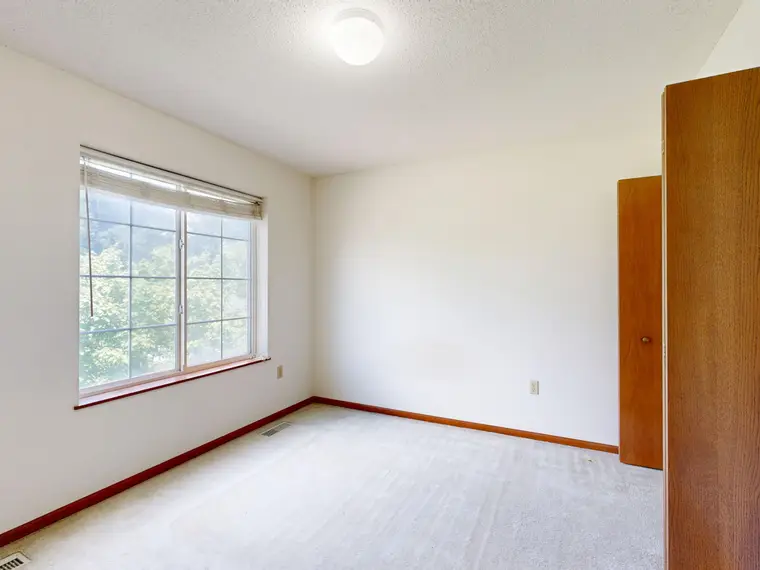
Floor removal & demo in Garland
Tile, thinset, carpet and old vinyl removed and hauled off, and the slab ground flat, for homes across Forney, Kaufman and Rockwall counties.
Learn more →
Tile in nearby areas
Ready to start your Garland project?
Free in-home estimate, clear pricing, and a crew that shows up when we say we will.