
Shutters and Blinds
Window covering is the one thing we sell that does not go on the floor, and it is here because light decides how everything else in a room reads. Shutters and blinds answer two questions at once: what people can see in, and how much of a July afternoon comes through the glass. Every opening gets measured in the house rather than taken off a plan.
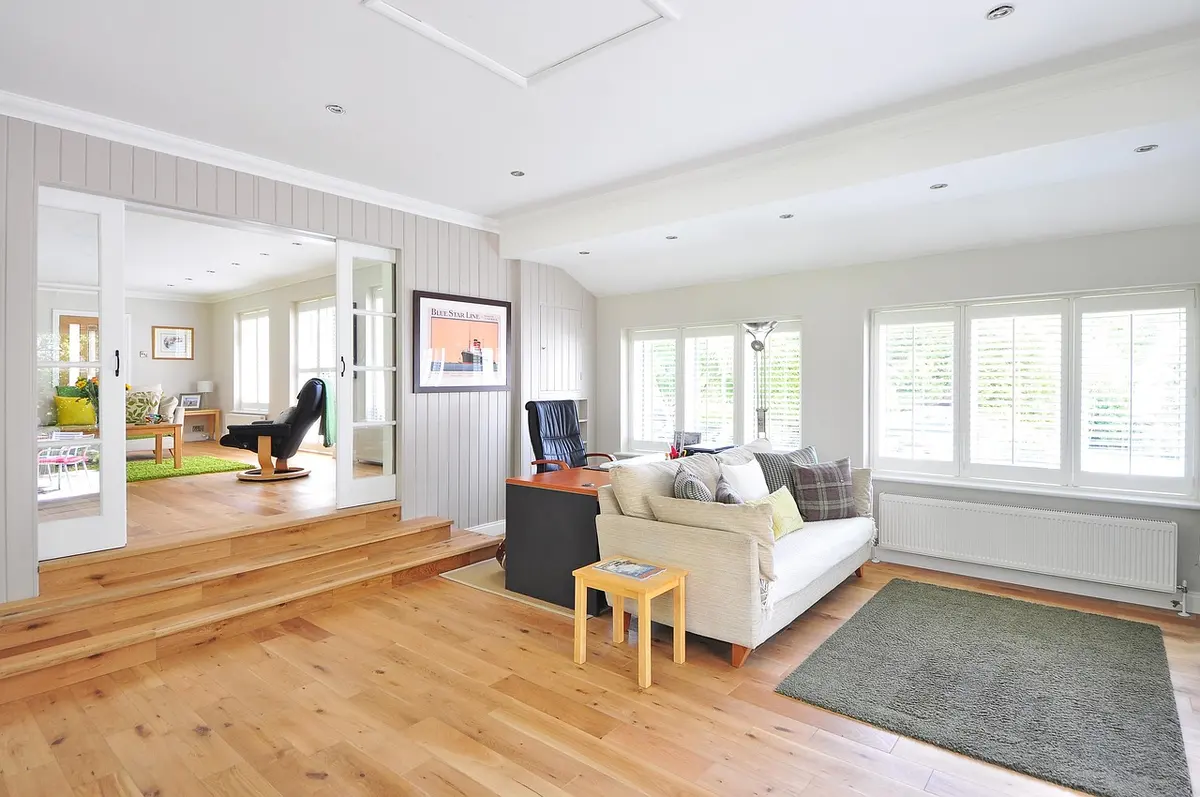
Plantation shutters, faux wood and real wood
A shutter is joinery fitted to the opening
A plantation shutter is joinery rather than a hanging product. Panels of wide louvers are hinged into a frame fitted to the window opening and finished into the trim, so the shutter becomes part of the architecture of the room instead of something suspended in front of it.
Louvers run from about two and a half inches up to four and a half, tilted by a hidden rod or a visible one, and the panels fold back when you want the glass clear.
Faux wood slats and the sag on wide spans
Faux wood blinds are horizontal slats, normally two or two and a half inches, in a PVC or composite that does not take up moisture. They hang from a headrail, raise on a lift and tilt with a wand or a cord.
They are heavier per foot than real wood, so a wide opening needs a divider rail or a center support to stop the headrail sagging.
Basswood takes stain and shows real grain
Real wood blinds are usually basswood. They are much lighter than faux, they take stain, and they have a depth of grain no printed composite reproduces, which matters when a window sits alongside stained cabinetry, a mantel or a stair rail.
The catch is that wood is still wood, and in this part of Texas that is a practical problem rather than a theoretical one.
What's included
- In-home measure of every opening at three points
- Plantation shutters in 2.5, 3.5 and 4.5 inch louvers
- Faux wood blinds for baths, laundries and west-facing glass
- Real wood blinds stained to match existing millwork
- Cordless lift and wand tilt for homes with young children
- Divider rails and center supports on wide openings
- Z-frames and build-outs where window depth is shallow
- Outside mount for openings that are out of square
Where faux wood holds up and real wood does not
A thin slat is the worst shape for wood
A blind slat is a wide, very thin section with an enormous amount of surface for its thickness, finished on the face and often less thoroughly on the back. That is close to the worst possible shape for wood movement.
The slat takes up moisture on one side faster than the other and answers by cupping, bowing or twisting along its length, and once it has twisted it never sits flat in the stack again.
Heat at the glass and daily humidity swings
North Texas gives it plenty to react to. A closed-up house behind west-facing glass in August runs far hotter at the window than out in the room, and the same window sees a dry cold snap in January.
Add the openings where humidity spikes daily, a window over a tub or above a kitchen sink, and real wood is being asked to do something it is not good at. Faux wood is indifferent to all of it.
West-facing glass in the late afternoon
The west side of a house here is its own problem in July. Late sun comes through the glass at an angle no roof overhang covers, and a closed shutter panel does more about it than a slat stack does, because the panel and its frame hold a layer of still air against the window rather than letting heat spill around the edges.
Real wood still earns a place in north and east rooms, on wide spans where the weight of faux slats is a nuisance, and where a stain has to be matched.
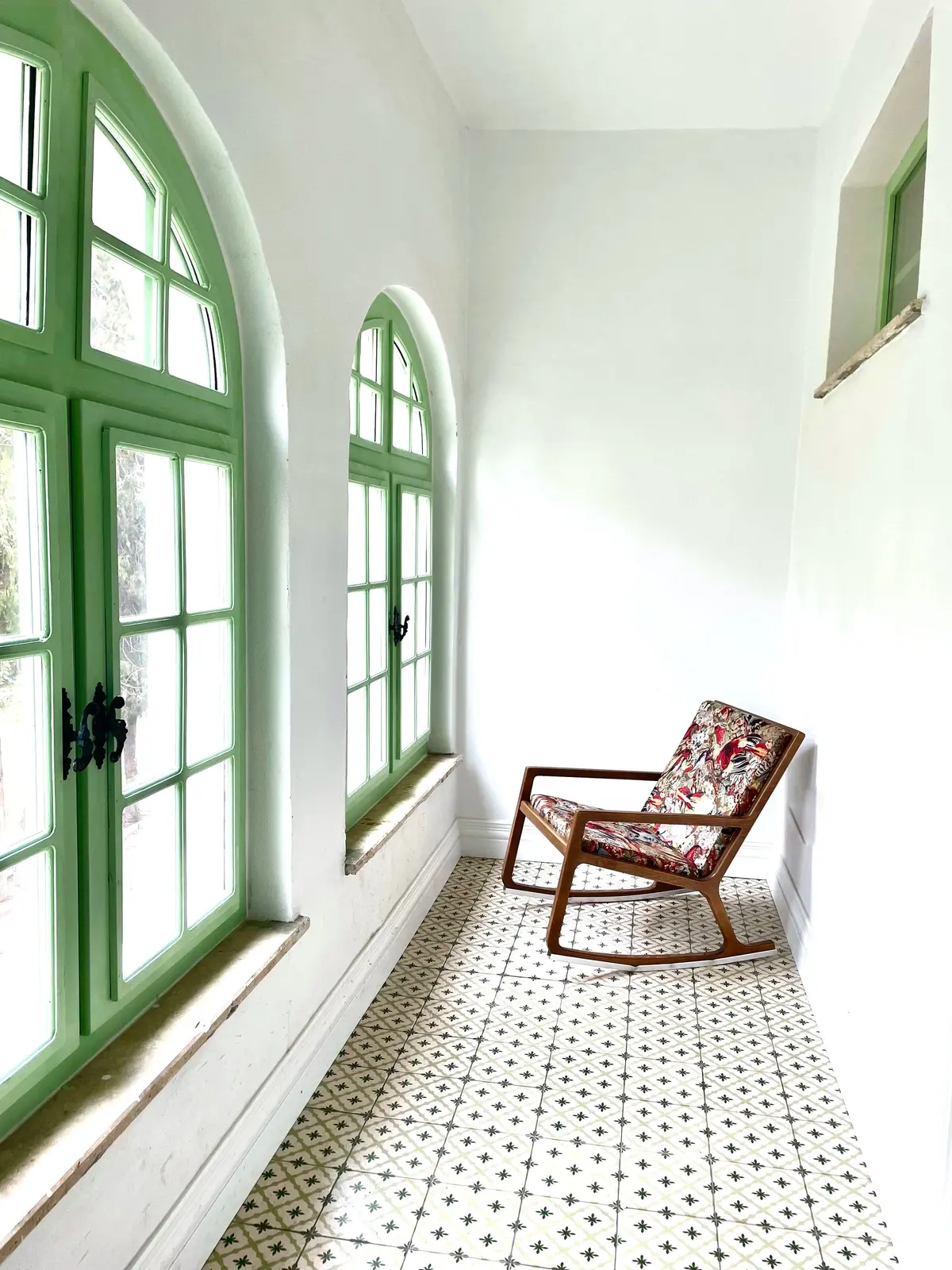
Inside mount, outside mount and light gaps
How much depth an inside mount needs
An inside mount sits within the window opening and leaves the casing showing. It is the cleaner look and it needs depth. A headrail needs enough return to clear the glass and any crank hardware, and a shutter frame carrying three and a half inch louvers needs considerably more.
Shallow openings are not ruled out: they take a Z frame that brings the shutter forward onto the casing, or a build-out strip that gives the frame something solid to land on.
Measuring at three points for run-out
Openings are almost never square, particularly in houses that have moved on this clay. We measure width at the top, middle and bottom and work from the smallest, and height at the left, center and right, because a quarter inch of run-out across a five foot window shows as a wedge of daylight down one side the moment the blind is hung.
Where an opening is far enough out that an inside mount would advertise it, mounting outside over the trim is the honest fix, and it blocks light better.
Tilting louvers up for light without exposure
Light and privacy are separate questions worth answering separately. Louvers tilted upward throw daylight onto the ceiling and carry the sightline from the street up with them, so a room can be private in the afternoon and still bright, which is a different result from shutting a blind.
Then there is the hardware. Lift cords and the inner cords on older blinds are a strangulation risk around small children and pets, cordless lifts and wand tilts remove the loop, and shutters have no cords at all.
What homeowners say
"All About Floors is amazing to work with! We recently had our entire flooring replaced and they not only did a wonderful job, the support and aftercare has been top notch! Highly recommend"
J Shoe2 · via Google "The team at All About Floors did an absolutely phenomenal job repairing a portion of a floor in my clients' home that nobody else would touch. We are so grateful for Patty and her amazing team!"
Carley Newlin · via Google
Shutters and Blinds questions
Should I choose shutters or blinds?
Shutters are a fixture and blinds are a furnishing, which is the honest way to decide. A shutter is built to the opening, stays with the house, gives the cleanest closed face and has no cords. Blinds are easier to change your mind about, suit rentals and secondary bedrooms, and come in more finishes and slat sizes. Plenty of houses end up with shutters in the front rooms and blinds elsewhere.
Will real wood blinds warp in a Texas bathroom?
Very likely, and sooner than people expect. A bathroom swings from shower humidity to dry air several times a day, and thin wood slats cup and twist until they no longer close flat. The same is true over a kitchen sink and in a laundry room. Faux wood is the standard answer in those openings, and current faux slats are close enough to painted wood that nobody notices.
My window frames are shallow. Can I still have plantation shutters?
Yes. Depth limits how a shutter is mounted, not whether you can have one. Where there is not enough return for the frame to sit inside the opening, a Z frame brings the shutter forward onto the casing, or a build-out strip is added so the frame has something to fasten to. On very shallow windows an outside mount over the trim is used instead.
Do shutters help with the heat on the west side of the house?
They help with the radiant heat coming through the glass, which is what you feel standing near a west window at six in the evening. A closed panel sits tight to the opening and holds still air against it, so less of that heat reaches the room and the surface near the glass stays cooler. It does not change what the window itself does, but the difference is easy to feel.
Are cordless blinds harder to operate?
Not usually. A cordless lift raises and lowers by the bottom rail and tilt is on a wand, so there is nothing to reach for above head height and no loop hanging where a child or a dog can reach it. On very tall or heavy blinds a motorized lift makes more sense than either. Safety is the main reason people change out corded blinds.
How does ordering work, and who installs them?
Everything is made to the measurements of your openings, so there is a manufacturing lead time rather than stock on a shelf. We measure in the house and bring samples, so finishes are seen in the light of the room they are going in. Our own installers hang them, estimates are free, and the labor carries the same one year warranty as our flooring.
Flexible financing available
Wisetack and Synchrony
Shutters and Blinds by city
- Rockwall Shutters and Blinds
- Forney Shutters and Blinds
- Fate Shutters and Blinds
- Terrell Shutters and Blinds
- Royse City Shutters and Blinds
- Heartland Shutters and Blinds
- Heath Shutters and Blinds
- Sunnyvale Shutters and Blinds
- Kaufman Shutters and Blinds
- Crandall Shutters and Blinds
- McLendon-Chisholm Shutters and Blinds
- Mabank Shutters and Blinds
- Talty Shutters and Blinds
- Combine Shutters and Blinds
- Kemp Shutters and Blinds
- Wills Point Shutters and Blinds
- Rowlett Shutters and Blinds
- Mesquite Shutters and Blinds
- Garland Shutters and Blinds
Other floors we install
-
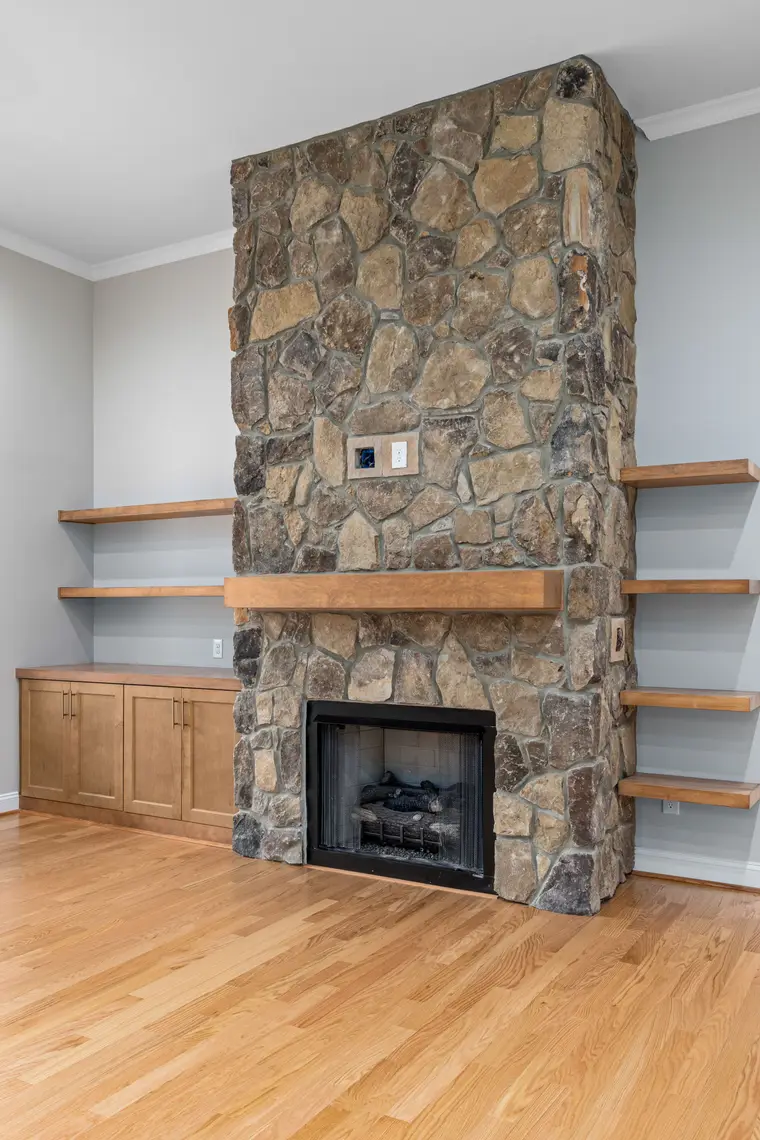
Hardwood installation
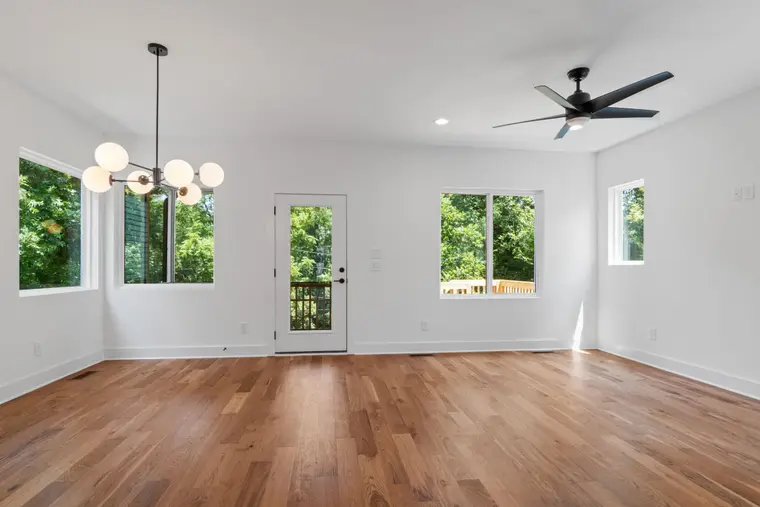
Solid and engineered hardwood installed over slab and pier-and-beam homes in Forney, Kaufman and Rockwall counties and the wider Dallas metro.
Learn more → -
Hardwood refinishing & sanding
Sanding and refinishing existing hardwood floors across Forney, Kaufman and Rockwall counties, starting with an honest read on whether yours can be saved.
Learn more → -
Luxury vinyl plank (LVP)
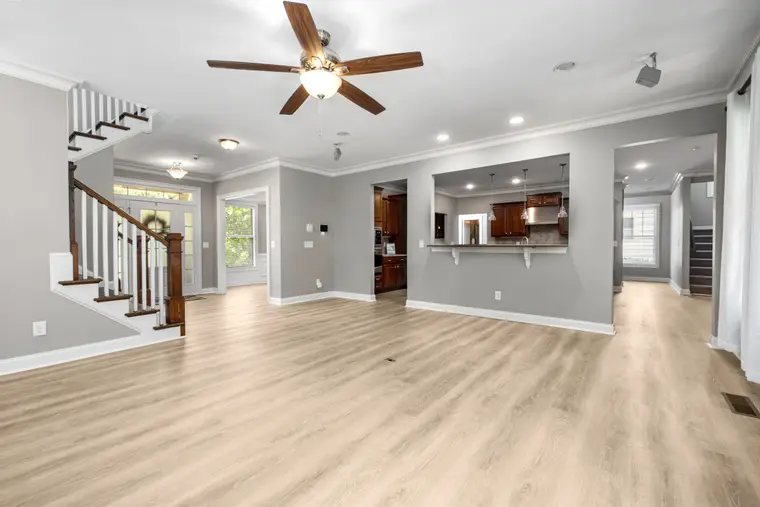
Luxury vinyl plank installed over slab in Forney, Rockwall and the Dallas metro, with the slab prep that keeps a floating floor tight and quiet.
Learn more → -
Laminate
Laminate flooring installed across Forney, Kaufman and Rockwall counties, with straight answers on AC ratings and the rooms it does not belong in.
Learn more → -
Tile
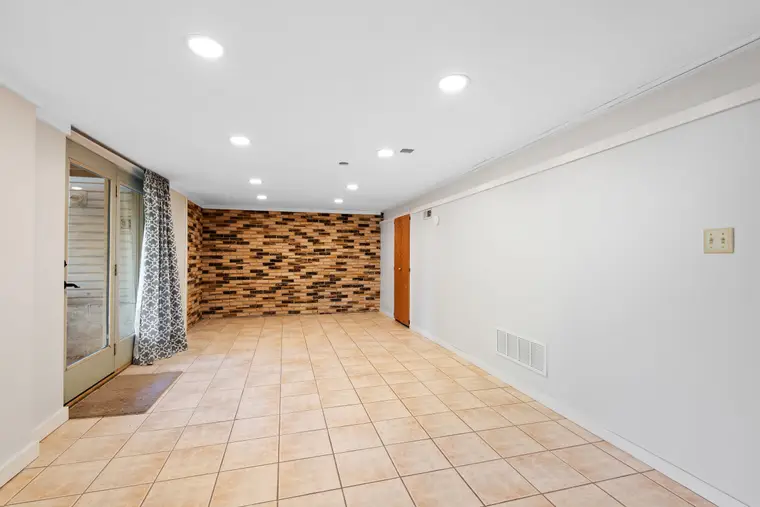
Porcelain, ceramic and natural stone tile set over properly prepped slabs in Forney and across the Dallas metro. Free in-home samples.
Learn more → -

Carpet
Carpet and pad for bedrooms, stairs and upstairs living areas, measured, seamed and power stretched throughout Forney and Kaufman County.
Learn more →
Ready for floors you'll actually love?
Free in-home estimate, clear pricing, and a crew that shows up when we say we will.